The Visiting Card: A Critical Guide to the Grand Marque Non-Vintages
Grand Marque, guide, Non-Vintages
Champagne Club
Champagne Club by Richard Juhlin guide to Guide Grand Marque – entry level champagne [ read the full champagne story ]
Estimated reading time: 8 minutes
In the world of Champagne, the prestige cuvées—Cristal, Dom Pérignon, Winston Churchill—steal the headlines and the auction hammers. But for the true connoisseur, the soul of a House is not found in its rare vintages, but in its Non-Vintage (NV).
Richard Juhlin has famously called the NV the “Visiting Card” of a producer. It is the hardest wine to make; it requires the Chef de Cave to blend dozens, sometimes hundreds, of base wines to recreate a consistent signature style year after year, defying the vagaries of weather.
For members of the Champagne Club, the Non-Vintage is not merely a “daily drinker”; it is a barometer of a House’s current form. Below is our extensive assessment of the Entry-Level NVs from the top 30 Grand Marques, analyzed through the exacting lens of the Juhlin 100-point scale.
The Philosophy: Understanding the Score
A note for the uninitiated: Richard Juhlin is arguably the world’s strictest critic on Non-Vintage Champagne. In a world where 90 points is handed out like candy, a Juhlin Score of 80+ for a standard NV indicates a “Really Good” wine. A score of 90+ for an entry-level bottle is a rare accolade reserved for wines of superior character and complexity.
“If I had the opportunity of tasting all [producers], I am convinced that the average would lie closer to the 50-point mark… 80-84 is a really good champagne.”
Richard Juhlin
I. The “Multi-Vintage” Revolution
These wines have transcended the “Non-Vintage” category. By relying less on a consistent recipe and more on the specific character of the base vintage, they offer complexity that rivals many vintage wines.
1. Jacquesson | Cuvée 7xx Series (e.g., 746/747)
The Verdict: The Chiquet brothers (and now the Artemis Group) changed the game by abandoning the “consistency” rule. Each “700” series release is a transparent snapshot of a specific base year, enriched by reserve wines.
Juhlin’s Take: A favorite of the club. It offers the depth of a vintage wine with the texture of fine Burgundy. The Cuvée 746 (base 2018) is rich, broad, and wood-influenced, scoring an incredible 92 points—a score usually reserved for Prestige Cuvées.
2. Louis Roederer | Collection 244
The Verdict: The retirement of Brut Premier was a gamble that paid off. The “Collection” series, numbered to track the blends since the house’s inception, utilizes a “Perpetual Reserve” (a solera-style tank) to add saline freshness.
Juhlin’s Take: “A smart MV.” The oak-aged reserves and the perpetual blend give it a complexity that Brut Premier never had. It is currently the benchmark for major house NVs, offering a salty, chalky finish that demands food.
II. The Heavyweights: Power & Pinot
For those who prefer the “English Style”—rich, oxidatively handled, and dominated by Pinot Noir.
Bollinger | Special Cuvée
The Style: The bastion of oak fermentation and magnum-aged reserve wines.
Juhlin’s Take: Bollinger is a “masculine” wine. The Special Cuvée is reliable, spicy, and apple-driven. While Richard notes it can sometimes be a bit rustic in its youth (hence the 88), its aging potential is legendary. Stored properly, this NV can evolve into a 93-point masterpiece over 5–10 years.
Charles Heidsieck | Brut Réserve
The Style: “Misé en Cave.” This house uses an incredible 40-50% reserve wines, aged for an average of 10 years.
Juhlin’s Take: A “Connoisseur’s NV.” Rich with notes of coffee, apricot, and toast. Richard acknowledges its massive quality but often finds the “current drinking” slightly heavy, preferring to let it soften. It is arguably the best value-for-money wine for those seeking maturity.
Gosset | Grande Réserve
The Style: No malolactic fermentation means searing acidity balanced by long lees aging.
Juhlin’s Take: Always reliable. The crisp, green-apple acidity makes it a perfect aperitif that wakes up the palate.
III. The Purists: Elegance & Chardonnay
Wines that prioritize finesse, floral notes, and a lighter touch.
Pol Roger | Brut Réserve (“White Foil”)
The Style: The coldest cellars in Epernay produce the finest bubbles.
Juhlin’s Take: The “Gentleman’s Champagne.” It is never aggressive, always polite, with a clean flow of citrus and white flowers. Richard holds Pol Roger in the highest regard, and while the NV is excellent, his heart truly lies with their vintage wines.
Taittinger | Brut Réserve
The Style: High Chardonnay content gives it a light, airy, and creamy profile.
Juhlin’s Take: A perfect summer champagne. It doesn’t demand deep analysis, but it delivers pure pleasure with notes of peach and vanilla.
Billecart-Salmon | Brut Réserve
The Style: Famous for their Rosé, but the Brut Réserve is a masterclass in low-temperature fermentation.
Juhlin’s Take: Clean, precise, and extremely fresh. It lacks the weight of Bollinger but makes up for it in crystal-clear purity.
IV. The Global Giants
The challenge of producing millions of bottles while maintaining quality. These scores reflect Juhlin’s honest assessment of “Standard” Champagne.
Moët & Chandon | Brut Impérial
The Verdict: The world’s most drunk champagne.
Juhlin’s Take: Often criticized by snobs, but Juhlin defends its technical competence. It is clean, correct, and technically flawless, with a scent of lime and brioche. It is not profound, but it is a “Really Good” (84 pts) introduction to the region.
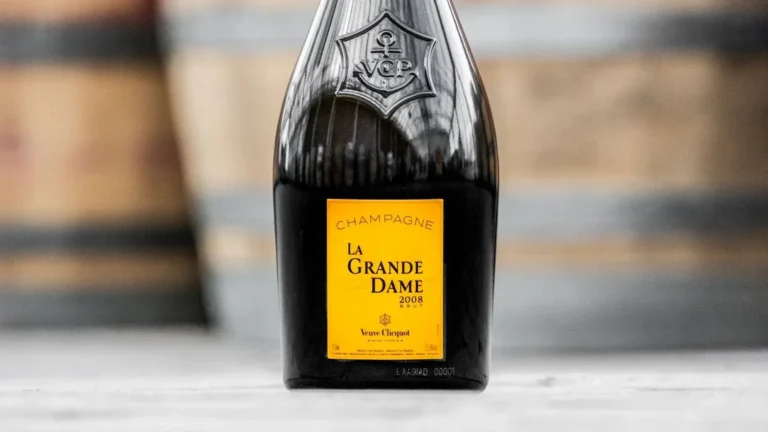
Veuve Clicquot | Yellow Label (Carte Jaune)
The Verdict: A Pinot-heavy powerhouse.
Juhlin’s Take: Relying heavily on reserve wines, the Yellow Label is consistent. Juhlin often finds it a bit broad and commercial in its youth, but admits that older bottles of Yellow Label can surprise with toasty, spicy complexity (hence the higher potential score).
G.H. Mumm | Cordon Rouge
The Verdict: A house in transition.
Juhlin’s Take: Historically inconsistent, which drags the score down. However, under new Chef de Cave Laurent Fresnet, the quality is improving. For now, it remains a simple, fruity wine that struggles to compete with the complexity of Roederer or Pol Roger.
V. The Outsiders & Rising Stars
Ayala: Since being bought by Bollinger, this house has found a new “Chardonnay-focused” identity that Juhlin appreciates for its dryness and minerality.
Alfred Gratien: A “Baby Krug.” Fermented entirely in oak barrels. Juhlin loves this oxidative style, rating it highly for its distinct personality.
Telmont: A newer entry to the Grand Marque list (majority-owned by Rémy Cointreau). While focusing heavily on organic viticulture (which is admirable), the liquid in the bottle is still finding its footing in the top tier.
The “Unfair” Comparison: Krug
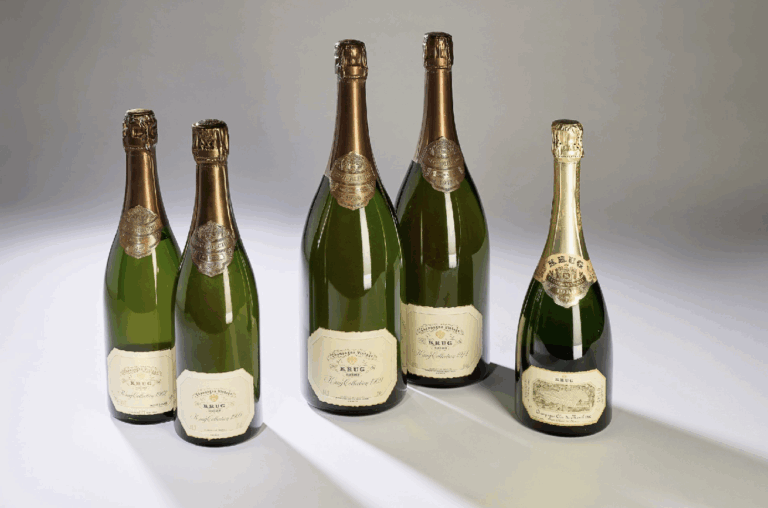
Note: We exclude Krug from the direct “Entry Level” comparison because, at €200+, it is priced like a Prestige Cuvée. However, it is an NV. Juhlin considers Krug Grande Cuvée to be superior to almost all other houses’ vintage wines. It is the king of blending.
When buying Non-Vintage Champagne, look for the Disgorgement Date on the back label. A wine like Bollinger Special Cuvée or Charles Heidsieck will jump from a score of 85 to 92 if you allow it to rest in your cellar for just two years after purchase. As Richard says: “Champagne is the only wine that improves in the bottle even without a vintage on the label.”