
Discover what grapes are included in Dom Pérignon and their origins within the renowned vineyards of Champagne. [ read the full champagne story ]
Estimated reading time: 2 minutes

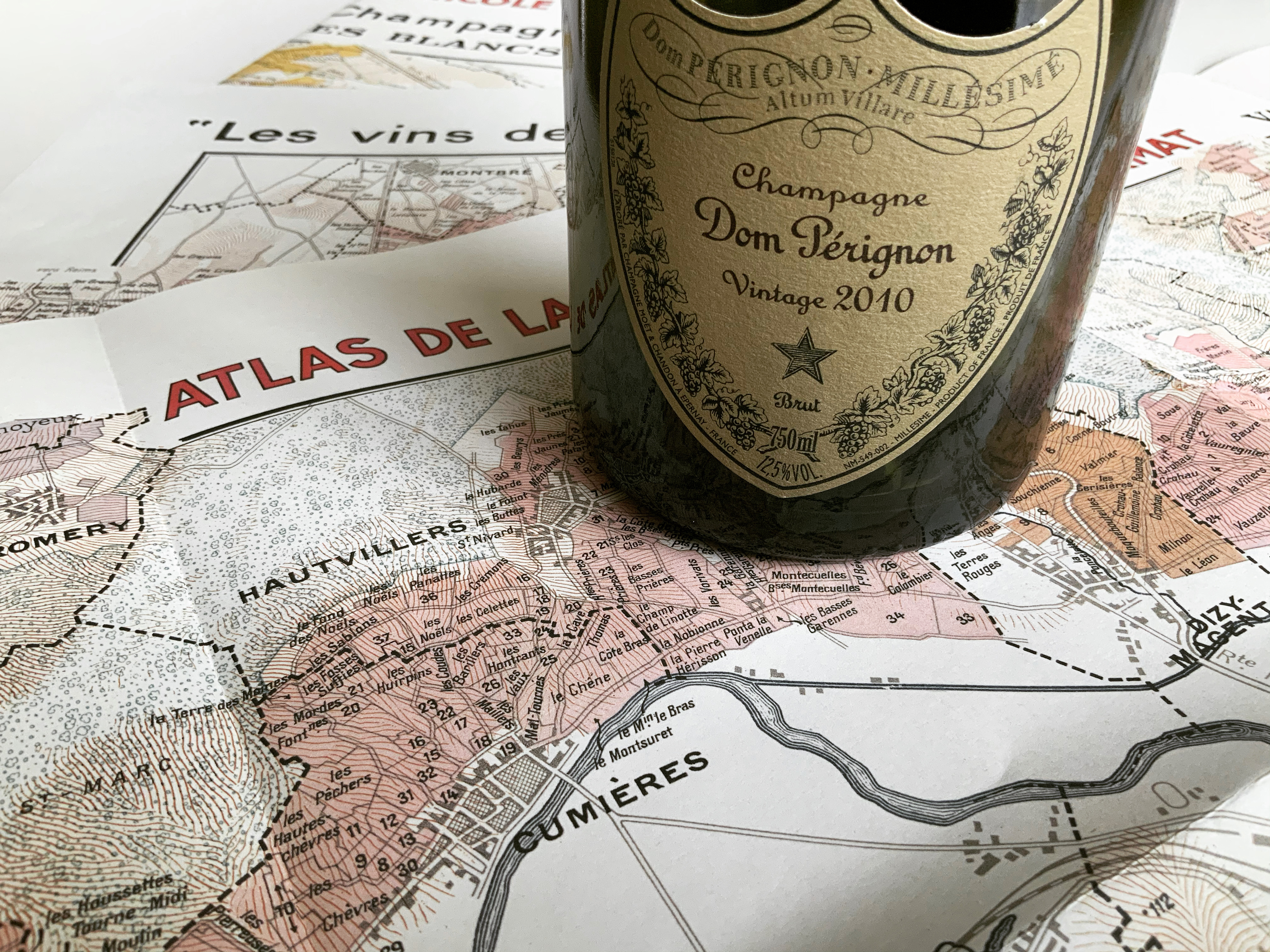
As you probably know, almost every year a large amount of high-quality wines are made under the Dom Pérignon label, where the grape blend is usually close to 50% Pinot Noir and 50% Chardonnay. But where do the grapes come from?
- The Dom Pérignon vineyards now consist of 900 hectares, of which 14 are Grand Cru and 15 Premier Cru.
- 350 hectares are the base vineyards that Vincent Chaperon uses when creating the cuvée.
- The most important are Verzenay, Mareuil-sur-Ay, Ay, Sillery, Bouzy, Hautvillers, Verzy and Dizy for pinot noir and Chouilly, Cramant, Le Mesnil, Avize and Oger for chardonnay.
Here are the names of the most important “lieux-dits” in each village.
| Aÿ | La Côte, La Côte Valnon, Meurtet and La Bauve |
| Mareuil-sur-Ay | Bourdeleuse, Blangeois and Les Clos |
| Hautvillers & Cumières | La Côte à Bras, Les Prières, La Cave Thomas and La Côte à Léry |
| Le Mesnil-sûr-Oger | Le Moulin à Vent and Les Hauts Varnaults |
| Avize | Chapelles and Pierre Vaudon |
| Cramant | Rouge Perte, Gros Mont, Les Bionnes and Les Buissons |
| Chouilly | Le Coteau de Saran and Le Revers de Plume Coq |
| Sillery | Les Bruyères |
| Mailly | Les Bruyères |
| Ambonnay | Les Assises, Dame and Meule |
| Bouzy | Feuillette, Jolivettes, Perte, Bertines, Cloches and Maillerettes |