
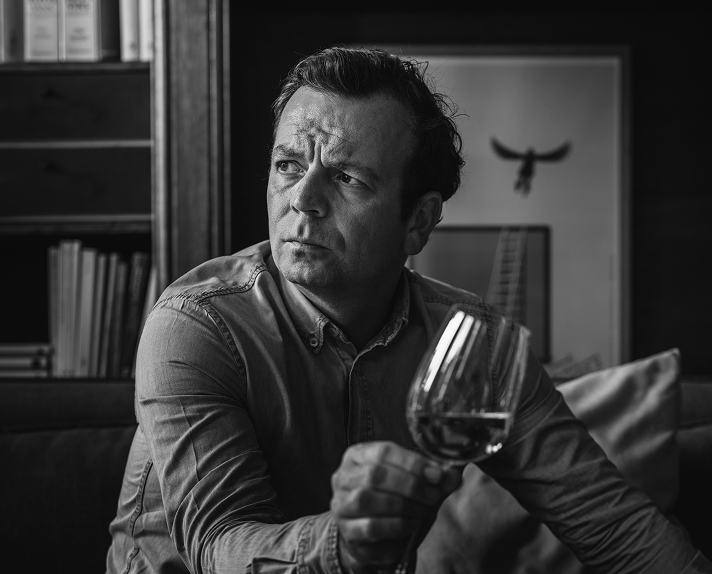
TheChampagneSommelier had a long sit-down with Managing Director Jean Garandeau at Jacquesson. [ read the full champagne story ]
Estimated reading time: 7 minutes

Jean Garandeau is the currently appointed Managing Director of the prestigious Champagne house Jacquesson. He took the helm in September 2022 following the acquisition of the house by Artémis Domaines, the wine company of François Pinault’s luxury group (which also owns brands like Gucci and Château Latour).
His appointment marks a significant transition for Jacquesson & Fils, moving it from nearly 50 years of family management under the Chiquet brothers to becoming a jewel in the crown of a global luxury portfolio.
Fact Box; Background & career
Jean Garandeau is a seasoned veteran of the ultra-high-end wine world. His background is rooted in the luxury-vigneron philosophy—balancing historical heritage with modern, precise management.
- Role at Artémis Domaines: Before leading Jacquesson, Garandeau served as the Sales and Marketing Director for Artémis Domaines. In this capacity, he oversaw some of the world’s most iconic estates, including Château Latour (Pauillac), Domaine d’Eugénie (Vosne-Romanée), and Château Grillet (Rhône), Clos de Tart (Morey-Saint-Denis), Bouchard Père & Fils (Beaune), Domaines des Cabottes (Puligny-Montrachet), Eisele Vineyard (Napa Valley), Beaux-Frères (Oregon).
- The Krug Connection: He previously spent time at the legendary Champagne house Krug. This is a fitting historical parallel, as Johann-Joseph Krug (founder of Krug) actually worked as the cellar master at Jacquesson in the 1830s before leaving to start his own house.
- Personal Roots: Born in Burgundy to a Burgundian mother and a father from the Bordeaux/Charente region, Garandeau grew up in a culture where fine wine was a serious family pursuit.

The Role at Jacquesson, Garandeau was brought in to ensure the creative independence of Jacquesson while integrating it into the Artémis stable.
- Philosophy of Continuity: Garandeau has publicly stated that his goal is not to “fix” Jacquesson, but to “fine-tune” it. Jean and his team are still very much in contact with Jean-Hervé and Laurent Chiquet (who remain on the board and supply grapes), to maintain the house’s cult status among wine connoisseurs.
- Focus on Terroir: He continues the house’s famous 700-series concept (numbered non-vintage cuvées) and its focus on single-vineyard, organic-leaning viticulture.
- The “Luxury” Shift: Under his leadership, Jacquesson is being positioned alongside “First Growth” labels, focusing on small production (approx. 250,000–300,000 bottles) and high exclusivity.
| Year | Milestone |
| 1798 | Founded by Memmie Jacquesson. |
| 1974 | Bought by Jean Chiquet, beginning the Chiquet family era. |
| March 2022 | Artémis Domaines acquires a minority stake. |
| Sept 2022 | Jean Garandeau is appointed Managing Director. |
| Dec 2022 | Artémis Domaines becomes the sole shareholder. |

The Interview
TheChampagneSommelier: Jean, you’ve led some of the most iconic names in wine. You have a background steeped in the classical wine regions of France. How did that shape your entry into the world of Champagne?
Garandeau: I was born in Burgundy to a Burgundian mother and a father from the Bordeaux/Charente region. I grew up in a culture where fine wine was a serious family pursuitMy career began at Moët & Hennessy, followed by a time at Krug. I also spent time at Krug, which is a fitting historical parallel since its founder Johann-Joseph Krug was once the cellar master at Jacquesson, in the 1830s before founding his own house. Before leading Jacquesson, I served as the Sales and Marketing Director for Artémis Domaines, overseeing iconic estates like Château Latour, Domaine d’Eugénie, Clos de Tart and Eisele Vineyard.
TheChampagneSommelier: What is the roll of Artemis & Domaine?
Garandeau: Artémis Domaines is the wine-investment arm of François Pinault’s luxury group. They acquired a minority stake in Jacquesson in March 2022 and became the sole shareholder by December 2022. My role is to integrate Jacquesson into the Artémis stable while ensuring its “creative independence” and maintaining its cult status.
The Jacquesson Style & Terroir
Or The Philosophy of Fine-Tuning
TheChampagneSommelier: There was some anxiety when Artémis acquired such a family-driven house. What is your mandate? How would you describe your ‘house/producer style’ and how do you achieve it?
Garandeau: My goal is not to “fix” Jacquesson, but to “fine-tune” it. We were brought in to ensure creative independence while providing the resources of the Artémis stable. I work closely with the former owners, Jean-Hervé and Laurent Chiquet, who remain on the board and continue to supply grapes from their personal vineyards. We are maintaining the focus on small production—around 250,000 to 300,000 bottles—to preserve exclusivity and quality.
We focus on a “luxury-vigneron” approach—balancing heritage with precise management. Central to this is the 700-series concept.

The Liquid Puzzle: Terroir and the 700-Series
TheChampagneSommelier: Jacquesson is famous for its rejection of “consistency” in favor of “excellence” through the 700-series. How is that style achieved? You describe Champagne as a “liquid puzzle.” How does the 700-series fit into that?
Garandeau: Exactly. The 700-series is our liquid puzzle, where the pieces change every year. While most houses chase a house style through consistency, we chase the expression of the vintage. On average, our Cuvée 700 is 50-55% Chardonnay, 30% Pinot Noir, and the rest Meunier. But if the Chardonnay yields are low—as they were in the Côte des Blancs for Cuvée 747—we adjust the blend to reflect that reality. However, we allow the vintage to dictate the blend. For example, in Cuvée 747, the Chardonnay yields in the Côte des Blancs were much lower than usual, and we wanted the cuvée to reflect that specific reality.
TheChampagneSommelier: What are the unique characteristics of your terroir?
Garandeau: Terroir is everything. The expression of the vineyards in Aÿ is completely different from those in Dizy. We try to highlight these specific styles in our single-vineyard releases. We currently have three signature plots, but we are cautious about expansion. If a vintage is exceptional, like 2022, we might release up to four single-vineyard plots, but if the quality isn’t there, we won’t produce them at all. We would even sacrifice a single plot to ensure the quality of the 700-series blend if necessary.
We highlight the style of each terroir through our signature plots—Dizy Corne Bautray, Dizy Terres Rouges, Avize Champ Caïn, and Aÿ Vauzelle Terme. We are extremely cautious about expanding this range. If the quality of the 700-series requires it, we will “sacrifice” a single plot and blend it back into the main cuvée to ensure the 700-series remains at the highest possible level. We only release these single-vineyard lots in exceptional vintages; in 2022, for instance, the vintage was so strong that we produced all four.
TheChampagneSommelier: What do you think of the current trend of ‘terroir champagnes’ made from individual sites?
Garandeau: It is part of our DNA. However, one must be humble when taking over an estate like this. You need to understand the land first. Champagne is a “liquid puzzle” where the pieces change every year, and it often takes ten years to see the true fruit of your labor.

Operational Evolution & Future Investments
Technical Evolution and Modern Tools
TheChampagneSommelier: Since Artémis Domaines took ownership, What primary operational changes have you implemented since taking over in late 2022?
Garandeau: Our priority is investing in our facilities to improve quality. We have focused heavily on infrastructure to give our winemaking team better tools:
- Pressing: Installed a new automatic press capable of handling small lots down to 1,000kg.
- Temperature Control: We implemented temperature regulation across all facilities to cool juices immediately after harvest, which is vital as temperatures rise.
- Renovation: We’ve renovated the cellars and built a new facility for the vineyard team.
- Disgorgement: Upgraded the disgorgement line to be more precise and allow for less sulfur.
- Reserve Aging: We added two large 90-hectoliter wooden vats to diversify how we age our reserve wines.
TheChampagneSommelier: How do you see the future of Champagne in a changing climate?
Garandeau: We are exchanging ideas with other Artémis domains in Bordeaux, Burgundy, and the US regarding organic farming andbiodiversity. This includes reintroducing trees and shrubs into the vineyards. We are also carefully considering what plant materials to use when we replant.
Future, Climate, and Collaboration
TheChampagneSommelier: How is Jacquesson preparing for a changing climate?
Garandeau: We exchange ideas regularly with the technical directors of our other domains in Burgundy and the US. We are looking at organic practices, reintroducing trees and shrubs for biodiversity (agroforestry), and carefully selecting plant material for future replanting. However, we are not trying to make “Burgundy in Champagne”—the identity must remain distinct.
On a Personal Note
TheChampagneSommelier: What does a typical workday look like for you?
Garandeau: It’s a mix of promoting the wine globally, administrative planning, and constant tasting. So it’s very diverse: hosting importers and clients, administrative work, and a lot of tastings. We do regular blind tastings for dosage decisions and conduct blending sessions throughout the year. I also spend significant time following our investment strategy and traveling to promote the wines.
TheChampagneSommelier: Since I think that Jacquesson has a truly gastronomical profile in all its Champagnes, This question falls naturally to ask You; On a more personal note, what is your favorite way to enjoy Champagne?
Garandeau: Seafood is a natural match—specifically I love the raw character of scallop carpaccio with yuzu or caviar for with Avize Champ Caïn. For wines with more Pinot Noir, I enjoy poultry with morels or black truffles. I also love pairing it with Parmigiano, which is quite fun or an old Comté can be a wonderful, nutty pairing.
TheChampagneSommelier: What do you drink more than your own Champagnes?
Garandeau: My palate is broad. I love building references. My interests include Burgundy, Bordeaux, Northern Rhône Syrah, Piedmont, and the transparency of German Riesling.
TheChampagneSommelier: Finally, your dream dinner guest?
Garandeau: I would serve them a Jacquesson, specifically the Vauzelle Terme 1996. It was one of the most emotionally powerful wines I have ever tasted—truly mind-blowing. As for the guest, it would be the contemporary artist Pierre Soulages. His work with the texture of black and how it reflects light—”outrenoir”—is a fascinating parallel to the way we seek light and transparency in our wines.


Details on the Artémis Domaines sustainability exchange
The sustainability exchange within Artémis Domaines is a formal collaborative framework where technical directors from the group’s world-class estates—including Château Latour (Bordeaux), Domaine d’Eugénie (Burgundy), and Eisele Vineyard (USA)—share viticultural and winemaking innovations to be applied at Jacquesson & Fils.
This “cross-domain” exchange focuses on three primary pillars of environmental and quality management:
1. Agroforestry and Biodiversity
A key initiative involves reintroducing biodiversity into the vineyard landscape to move away from monoculture.
- Reintroducing Flora: The domains are sharing results on the effect of planting trees, shrubs, and bushes within and around vine plots.
- Ecosystem Balance: The goal is to create a more resilient vineyard ecosystem that can better regulate pests and soil health naturally.
2. Organic and Low-Input Agriculture
Drawing on the expertise of Château Latour—which became the first Premier Grand Cru to be certified organic in 2018—the exchange focuses on reducing synthetic interventions.
- Knowledge Sharing: Technical teams meet regularly to discuss organic practices and their long-term effects on soil structure and vine health.
- Plant Material: There is an active dialogue, particularly with the Burgundy teams, regarding the selection of clonal and massal selection materials for future replanting to ensure heat and disease resistance.
3. Precision Winemaking and Resource Management
The exchange also extends to the technical tools used in the winery to minimize the environmental footprint.
- Temperature & Water: Sharing strategies on rapid juice cooling (thermally regulated facilities) and water conservation during the harvest and cleaning cycles.
- Minimal Intervention: The upgrade of Jacquesson’s disgorgement line to allow for lower sulfur usage is a direct result of the group’s shared philosophy of making “pure” wines with fewer additives.
- Wood Research: The team discusses the specific types and origins of wood used for aging reservoir wines, leveraging the group’s extensive experience with barrel and vat maturation.