

A great Champagne can lose half its magic in the wrong glass, at the wrong temperature, in the wrong company of aromas. That is why learning how to taste champagne properly is less about ritual for ritual’s sake and more about giving the wine every chance to speak clearly. If you care about provenance, vintage character, and the signature of a house or grower, tasting well is not a flourish. It is the difference between merely drinking Champagne and actually understanding it.
How to taste Champagne properly starts before the first sip
Serious tasting begins with restraint. Champagne is often served too cold, poured too quickly, and judged before it has had time to unfold. The first task is to create conditions that let detail emerge.
Temperature matters more than most people realize. Very cold Champagne will emphasize freshness and mousse, but it suppresses aroma and can flatten nuance. For many non-vintage styles, around 46 to 50 degrees Fahrenheit is a sound range. Vintage Champagne, prestige cuvées, and wines with time on lees or extended bottle age often show more complexity closer to 50 to 54 degrees. If a bottle feels icy, wait. Five to ten minutes can transform the glass.
Glassware is equally decisive. The classic flute may preserve bubbles, but it narrows the aromatic picture too severely for thoughtful tasting. A white wine glass or a tulip-shaped Champagne glass is usually the better choice. You want enough bowl to collect aroma and enough shape to focus it. The point is not theatrical effervescence. The point is precision.
The environment should be neutral. Heavy perfume, scented candles, coffee, and even nearby cooking aromas can distort your reading of the wine. Light also helps. You do not need a laboratory, but you do need clarity.
Look first, but do not stop at the bubbles
Visual assessment is useful, though many tasters overrate it. Start by observing color and clarity. Youthful Blanc de Blancs may show pale lemon with green highlights. Wines with bottle age can shift toward gold, straw, or subtle copper tones depending on grape composition and evolution. Rosé Champagne may range from onion skin to deep salmon, and that variation can already tell you something about style and extraction.
Then observe the mousse. Fine, persistent bubbles often suggest careful production and healthy wine, but bubble size alone is not a quality verdict. Some brilliant Champagnes are gentler in expression. What matters more is the overall impression: energy, finesse, and harmony in the glass.
Tilt the glass over a white surface if possible. This small habit sharpens your eye and keeps you from making broad assumptions. Color can suggest age, oxidation, grape mix, and dosage style, but it never replaces the nose and palate.
The nose is where Champagne reveals its identity
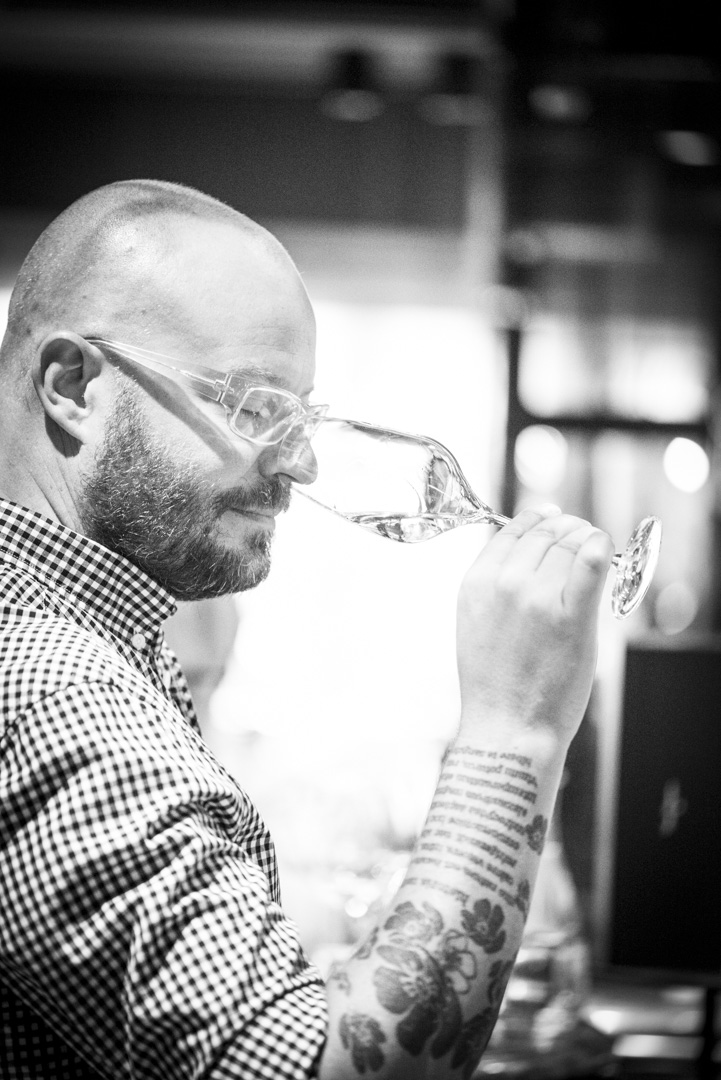
If you want to know how to taste champagne properly, spend more time smelling than sipping. Aroma is where grape variety, terroir, élevage, lees aging, dosage, and bottle maturity begin to separate themselves.
Start without swirling. The first aromas are often the most delicate: chalk, oyster shell, lemon zest, white flowers, fresh apple, pear skin, or crushed herbs. Then swirl gently and return to the glass. Now deeper notes may emerge – brioche, hazelnut, pastry cream, smoke, red currant, dried citrus peel, marzipan, mushroom, or honey.
The key is to think in layers rather than isolated descriptors. A young Chardonnay-led wine from the Côte des Blancs may present citrus, white flowers, and chalk in a linear, tensile profile. A Pinot Noir-driven Champagne from the Montagne de Reims or Aube may move toward red apple, spice, and a broader, vinous frame. Extended lees aging may add bakery notes, but in top wines those notes should sit within the fruit and mineral structure, not overwhelm them.
Do not force tasting notes too early. Better to ask: is the wine cool-toned or warm-toned? Strict or generous? Mineral or expansive? Youthful or evolved? These broader judgments often lead to more accurate detail.
Taste texture, not just flavor
The first sip should be modest. Let the wine move across the entire palate. Champagne is not only about flavor. It is about architecture.
Acidity is the spine, but mousse shapes the way that spine is felt. In a fine wine, the bubbles should contribute creaminess, lift, and rhythm rather than aggression. Coarse mousse can make a wine feel disjointed even if the flavors are attractive. Fine mousse, by contrast, can carry great precision and calm authority.
Pay attention to the attack, the mid-palate, and the finish. Does the wine enter sharply, then broaden? Does it begin rich but lose definition? Does it become more saline as it lingers? The best Champagnes often change shape in the mouth. They are dynamic.
Dosage also deserves a more nuanced reading than simple sweetness. A Brut Champagne may not taste sweet at all, yet dosage can soften edges, frame fruit, and influence texture. In some wines, lower dosage reveals thrilling chalky cut. In others, it exposes imbalance. Brut Nature is not automatically more serious, just as a slightly higher dosage is not automatically less refined. It depends on fruit concentration, acidity, and house style.
How to taste Champagne properly by judging balance and length
Once you have registered aroma and texture, move to evaluation. The central question is balance. Great Champagne is not defined by power or rarity alone. It is defined by the relationship between freshness, fruit, autolytic character, structure, and finish.
Ask whether all the elements are pulling in the same direction. Is the acidity integrated or severe? Is the fruit vivid enough to carry the wine? Do the yeasty and toasty notes add complexity or dominate the profile? Does the finish fade abruptly, or does it echo with mineral, citrus, smoke, spice, or noble bitterness?
Length is one of the clearest markers of quality. In ordinary sparkling wine, the impression can disappear as soon as the bubbles settle. In serious Champagne, the wine keeps speaking. The aftertaste may become more detailed than the first sip.
This is also where maturity matters. A young prestige cuvée can feel impressive but not yet complete. An older bottle may trade primary fruit for truffle, roasted nuts, coffee bean, dried flowers, and profound savoriness. Neither stage is inherently superior. The question is whether the wine is convincing in its current form.
Context changes what you perceive
No tasting happens in a vacuum. Food, glass size, serving sequence, and even the pace of the evening affect what you notice.
If you are tasting multiple Champagnes, move from lighter and drier styles toward richer and more powerful ones. A taut Blanc de Blancs before a mature Pinot-heavy vintage wine makes sense. The reverse can mute the first wine unfairly. Rosé usually belongs later unless it is unusually delicate.
Food pairings can elevate perception, but they can also blur it. Salty foods may make a Champagne feel more generous. Rich dishes can reveal acidity and cut. Caviar, oysters, sashimi, fried chicken, Comté, and truffled dishes all interact differently with the wine’s structure. For pure assessment, taste first without food. Then return with the dish and study the change.
Bottle variation and serving timing also matter, especially with older wines. A recently disgorged bottle may show more tension and overt freshness. A wine that has rested longer post-disgorgement may present greater harmony. The same cuvée can perform differently across formats and storage histories.
Common mistakes when tasting Champagne
The most common error is treating Champagne as a category rather than a spectrum. People say they taste brioche and citrus, then stop there. That is only the surface. The more useful question is what kind of citrus, what kind of pastry note, and how those tones relate to place and age.
Another mistake is overvaluing bubbles. Mousse should support the wine, not distract from it. Likewise, many tasters rush through the finish. Champagne often reveals its pedigree after swallowing, when the interplay of chalk, salt, fruit, and autolysis settles into focus.
Finally, there is the temptation to judge too quickly. Some bottles open slowly. Prestigious wines in particular can seem reserved at first, then become increasingly articulate over fifteen or twenty minutes. Patience is part of accuracy.
For readers who want to refine that accuracy, Champagne Club offers an unusually deep reference point through Richard Juhlin’s tasting universe and a library built for comparative learning rather than casual opinion.
Building a better Champagne palate
The fastest way to improve is comparative tasting. Taste Blanc de Blancs against Blanc de Noirs. Taste non-vintage beside vintage. Taste a large house against a grower-producer from the same broad area. Patterns emerge surprisingly quickly when the variables are controlled.
Take brief notes, but make them disciplined. Record temperature, glass type, disgorgement if known, and your sequence of impressions. Over time, you will notice that your palate becomes less dependent on obvious markers and more sensitive to texture, precision, and finish.
The reward is not just better vocabulary. It is better judgment. You buy more intelligently, pair more confidently, and experience more of what great Champagne is capable of expressing.
The finest bottles never ask for ceremony for its own sake. They ask for attention. Give them that, and they rarely stay silent.