

[ read the full champagne story ]
Estimated reading time: 7 minutes
A mature bottle of Champagne can be ruined in less than a minute. Serve it too cold and the aromas shut down. Use the wrong glass and the wine feels mute and angular. Open it with a celebratory pop and you may lose both pressure and poise. If you want to know how to serve vintage champagne properly, the goal is not theater. It is preservation – of texture, detail, and the quiet complexity that only time can build.
Vintage Champagne is not simply standard Champagne with a more prestigious label. It is the result of a single harvest, shaped by a specific growing season and then refined over years, sometimes decades, on lees and in bottle. That means service matters more, not less. Young non-vintage wines can often survive casual handling. Fine vintage bottles are far less forgiving.
How to Serve Vintage Champagne Without Flattening It
The first decision is temperature, and this is where many otherwise experienced drinkers get it wrong. Vintage Champagne should usually be served slightly warmer than basic non-vintage bottlings. Around 48 to 54 F is often the sweet spot, depending on age and style. A youthful, high-acid Blanc de Blancs from a cool year can show beautifully near the lower end. An older, broader wine with developed autolytic and tertiary notes may need the higher end to reveal itself fully.
Straight from a very cold refrigerator, most vintage Champagne will seem tighter than it really is. Citrus, chalk, smoke, spice, and toasted notes can disappear behind simple coldness. On the other hand, if the bottle gets too warm, mousse can feel coarse and the wine can lose definition. The ideal is not merely chilled. It is precisely cool.
An ice bucket can help, but only if used with restraint. Twenty minutes in a half ice, half water bucket is often enough to bring a cellar-temperature bottle into the right zone. Leaving an already cold bottle in ice for an hour is a common mistake. If the wine has been stored in the refrigerator, take it out 10 to 15 minutes before serving and check its progression in the glass.
Choose Glassware for Aroma, Not Drama
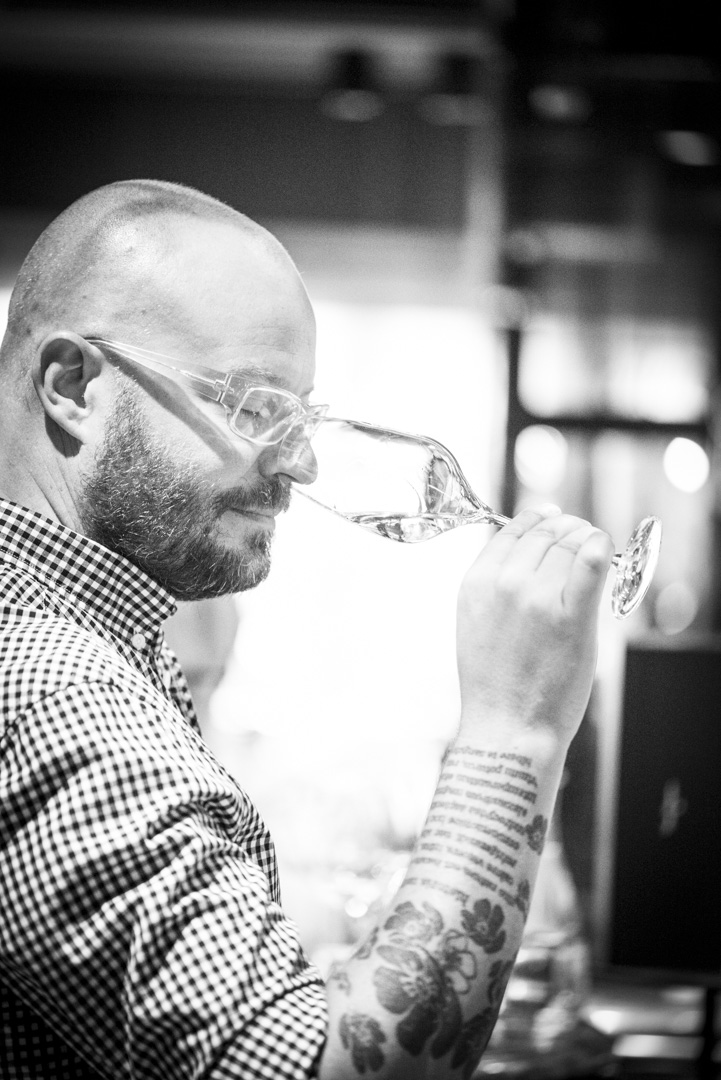
If the bottle is serious, the flute is rarely the best choice. Flutes preserve the visual rise of bubbles, but they narrow the wine’s aromatic range and compress the palate. For vintage Champagne, especially wines with some maturity, a white wine glass or tulip-shaped Champagne glass is almost always superior.
The right glass gives the wine room to open while still guiding the mousse. You want lift, not turbulence. A broad, flat coupe is even less suitable than a flute for most vintage wines. It may look glamorous, but it encourages rapid dissipation and exposes the wine too quickly.
Glass size should match the bottle’s ambition. Grand vintage cuvees deserve proper stemware with enough bowl to capture detail. If you are pouring several wines side by side, use consistent glasses so the differences come from the wines rather than the vessel.
Cleanliness matters more than many hosts realize. Residual detergent can distort mousse and aroma. Polished, neutral-smelling glasses are essential. Vintage Champagne is subtle enough to reveal every flaw in preparation.
Opening the Bottle the Right Way
The correct opening is almost silent. Remove the foil, keep your thumb on the cork, loosen the cage, and hold the bottle at a slight angle away from guests. Then grip the cork and rotate the bottle, not the cork, while maintaining gentle upward resistance. The aim is a soft sigh, not a bang.
Why does this matter? Because the dramatic pop prized at parties releases pressure and can agitate the wine. With an older bottle, especially one carrying less pressure due to age, rough opening can be particularly damaging. Sediment is uncommon in Champagne compared with still wine, but older bottles can still be fragile, and any unnecessary shock is best avoided.
If the cork is stubborn, patience is the answer. Older corks can dry or cling to the neck. A towel and a steady grip are often enough. Force is not sophistication.
Should You Decant Vintage Champagne?
This is where nuance matters. The old rule that Champagne should never be decanted is too rigid. Some vintage Champagnes, particularly young prestige cuvees or very reductive wines, can benefit from a careful decant into a clean, narrow decanter shortly before service. Air can broaden the bouquet and soften a closed, severe first impression.
But decanting is never automatic. It costs you some pressure and alters the wine’s presentation. Mature bottles, delicate bottles, and wines prized for filigreed mousse may show better straight from bottle and evolve naturally in the glass. If you know the producer style, the vintage, and the bottle condition, you can make an informed decision. If you do not, caution is usually wiser than intervention.
A useful middle path is to pour a small first taste, assess the wine after a few minutes, and let the bottle come to you. Many vintage Champagnes gain volume and aromatic complexity rapidly once in the glass. What seems restrained at first may become expansive with just a little patience.
Timing Matters More Than Most Hosts Think
A fine vintage Champagne should not be treated as an afterthought aperitif if the wine deserves contemplation. Some bottles are brilliant before dinner, especially linear, chalk-driven wines with freshness and cut. Others are better at the table, where food gives their breadth and savory depth a proper frame.
This depends on style. Blanc de Blancs from Côte des Blancs vineyards can be magnificent with oysters, crudo, or simply by themselves when the room is attentive. Richer vintage blends, oak-aged cuvees, or mature Pinot Noir-led wines often become more persuasive with turbot, lobster, roast chicken, mushrooms, or aged Comté.
The key is not to bury the wine under aggressive seasoning or sweetness. Vintage Champagne can handle more than many people assume, but subtle complexity is still vulnerable. Truffle can work beautifully. Heavy chili heat usually does not.
How Much to Pour
Do not fill the glass as if it were banquet sparkling wine. A smaller first pour gives the wine space to evolve and lets you revisit it as temperature and oxygen reveal more layers. Around one-third of the glass is a sensible starting point.
This also helps with precision. The first pour often shows tension and lift. The second may show breadth, pastry notes, smoke, dried citrus, hazelnut, or saline length. Vintage Champagne is one of the few wines where the serving arc within a single glass can be almost as interesting as the first impression.
Serving Older Vintages Requires Extra Care
A bottle with significant age asks for a gentler hand. Pressure may be lower, the cork may be weaker, and the aromatic spectrum may lean toward brioche, honey, mushroom, coffee, truffle, and dried orchard fruit rather than bright primary fruit. These bottles are often at their best with slightly less chill and a calmer setting.
Do not rush old vintage Champagne into a loud room full of competing scents and warm lighting. It sounds theatrical, but context matters. Mature Champagne is about nuance. Perfume, candles, and a kitchen in full sear mode can blur the experience.
Bottle provenance matters too. A perfectly stored bottle from a lesser year may outperform a poorly stored bottle from a famous one. If the fill level, cork condition, or storage history is doubtful, lower your expectations and handle the wine even more carefully. Service can improve a good bottle, but it cannot rescue a damaged one.
Common Mistakes When Serving Vintage Champagne
The biggest error is overchilling, closely followed by using flutes out of habit. Another is treating all vintage Champagne the same way. A taut 2013 and a mellow 1996 do not want identical service. Nor do a laser-like grower Blanc de Blancs and a broad, barrel-influenced prestige cuvee.
People also tend to serve vintage Champagne too quickly. Great bottles need a little observation. Watch the wine in the glass. Return to it after five minutes. Let it tell you whether it wants more warmth, more air, or food.
That is the pleasure of serving it well. You are not simply presenting a luxury object. You are giving a singular wine the conditions to speak clearly. For collectors, sommeliers, and anyone serious about the pinnacle of effervescence, that small discipline is the difference between drinking vintage Champagne and truly hearing it.