An Exploration of the Earth’s Most Decadent Symbiosis – For Champagne Club by Richard Juhlin. [ read the full champagne story ]
Estimated reading time: 6 minutes
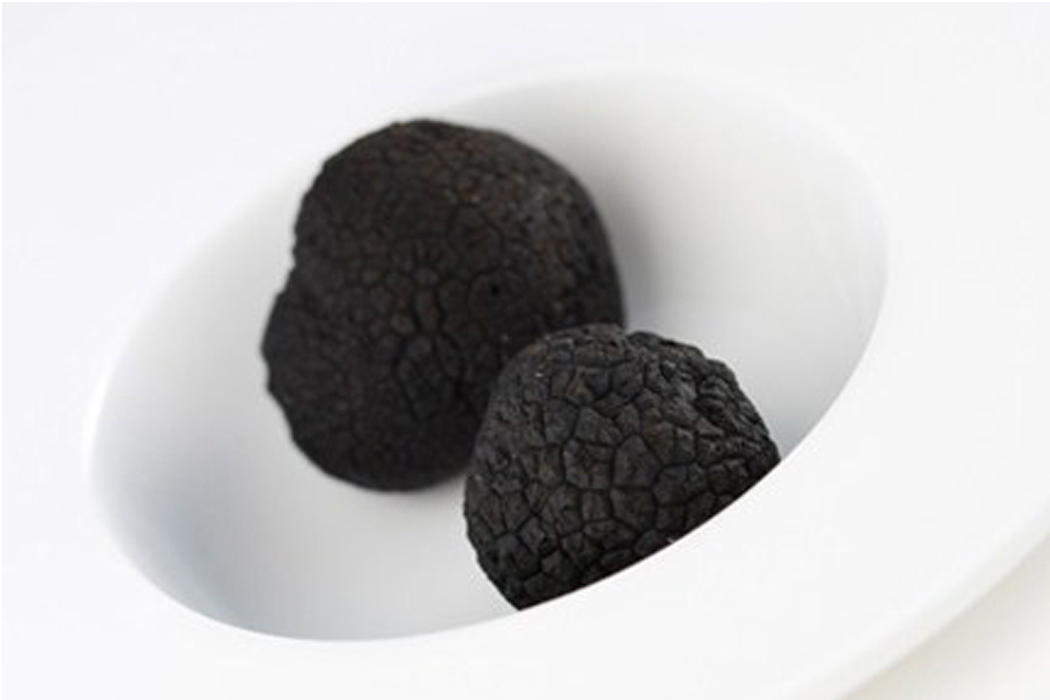
As the frost settles on the vineyards of Champagne and the nights draw in, the gastronomic world awakens to its most intoxicating season: the season of the Black Truffle (Tuber melanosporum).
There are pairings that are pleasant, pairings that are functional, and then there are pairings that touch the divine. The marriage of aged, complex Champagne and the “Black Diamond” of the kitchen belongs firmly to the latter category. It is a combination that defies the simplistic logic of “white wine with fish, red wine with meat.” It is a pairing built not on contrast, but on a profound, molecular affinity—a bridge of Umami.
For the connoisseur, this is the pinnacle of winter dining. But be warned: not just any bottle will do. To dance with the truffle, a Champagne must possess weight, age, and a soul deep enough to match the earth itself.
I. The Science of Seduction: The Umami Connection
Why does this pairing work so spectacularly? The answer lies in the fifth taste: Umami.
The black truffle is a powerhouse of savory, musky intensity. It is rich in glutamates, offering aromas of damp earth, forest floor (sous-bois), dried leather, and musk. To pair a crisp, young, fruit-forward non-vintage Champagne with this would be a tragedy; the truffle would obliterate the wine, making it taste thin and metallic.
Instead, we seek Champagnes that have undergone a metamorphosis. We look for the chemistry of Autolysisand Oxidation.
- The Yeast Factor (Autolysis): When Champagne rests on its lees (dead yeast cells) for extended periods—five, ten, or twenty years—the yeast breaks down, releasing amino acids and mannoproteins. This process creates flavors of brioche, toasted nuts, and, crucially, fresh mushroom. An aged Champagne literally develops the flavor profile of the fungus kingdom.
- The Bridge: When you sip a mature Champagne alongside a truffle-laden dish, you are creating a “flavor bridge.” The mushroom notes in the wine latch onto the truffle on the plate, while the wine’s inherent acidity cuts through the fat (butter, cream, or cheese) that invariably accompanies the truffle. It is a perfect cycle of richness and refreshment.
II. The Rules of Engagement: Selecting the Cuvée
To stand up to the truffle, the Champagne must have shoulders. We are looking for three specific characteristics:
- Dominance of Pinot Noir: Pinot Noir provides the structure, the body, and the earthy, red-fruit undertones that harmonize with the musk of the truffle.
- Oak Fermentation: Wines vinified in oak barrels (sous bois) have a micro-oxidative character that mimics the savory depth of the truffle.
- Significant Age (Post-Disgorgement or Late Disgorgement): We need tertiary aromas. We want coffee, mocha, dried fig, and forest floor.
III. The Sommelier’s Selection: The Umami Giants
Here are the specific cuvées that do not merely survive the truffle but elevate it to new heights.
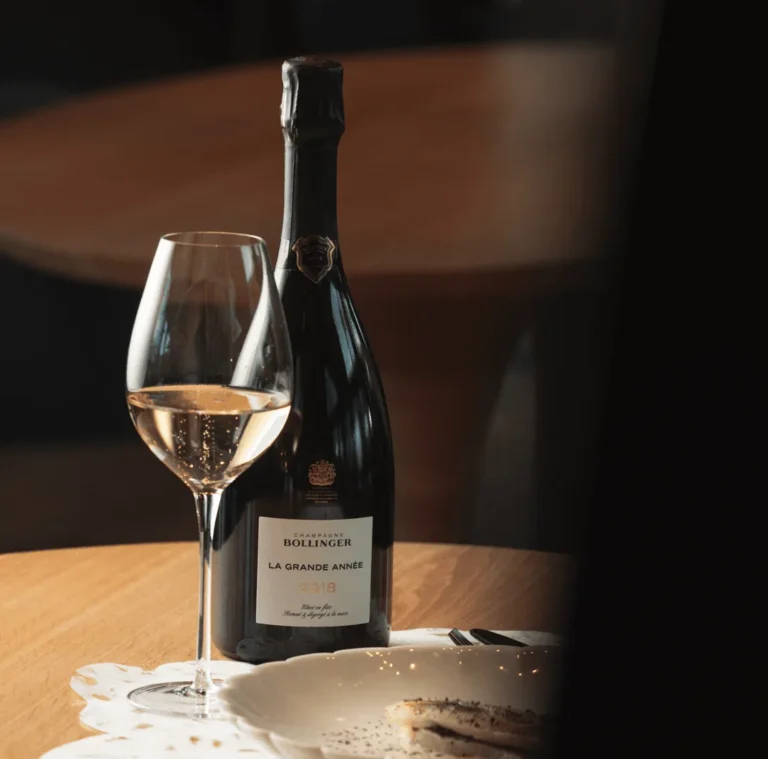
1. The Undisputed King: Bollinger R.D. (Récemment Dégorgé)
If there is one wine born for the black truffle, it is Bollinger R.D. Dominated by Pinot Noir from Aÿ and Verzenay, fermented in oak barrels, and aged for over a decade on the lees, it is a monster of complexity.
- The Experience: The R.D. signature is a nose of walnut, mushroom, mocha, and damp earth. It mirrors the truffle’s profile almost perfectly. The 2007 or 2008 vintages, with their intense acidity and savory depth, are spectacular partners for a Truffle Risotto.
2. The Woody Alchemist: Henri Giraud ‘Argonne’
Claude Giraud is the master of the Argonne forest oak. His top cuvée, fermented and aged in new oak barrels, possesses a tannic grip, a spicy richness, and a broad texture that is closer to a great white Burgundy than a typical Champagne.
- The Experience: The oak imparts notes of sandalwood, smoke, and vanilla, which wrap around the truffle like a warm coat. Pair this with Scrambled Eggs with generous shavings of Black Truffle—the fat of the eggs and the creaminess of the wine are a match made in heaven.
3. The Plenitude of Power: Dom Pérignon P2 (Plénitude 2)
While the standard vintage is elegant, the P2 (aged 15+ years on lees) enters a different dimension. The reduction and “smoke” often associated with Dom Pérignon transform into a deep, iodine, toasted, and savory intensity.
- The Experience: The P2 has a “dark” minerality. It vibrates with energy. Its notes of toasted grain, dried spices, and peat make it an exceptional pairing for Veal Sweetbreads with Truffle Jus.
4. The Grower’s Gem: Egly-Ouriet Grand Cru Millésime
Francis Egly makes Pinot Noir in Ambonnay that rivals the greatest red wines of the Côte de Nuits. His vintage Champagnes are powerful, vinous, and unapologetically dense.
- The Experience: This is a “wine-drinker’s Champagne.” It has the weight and the dark fruit profile to handle even Tournedos Rossini (Filet Mignon with Foie Gras and Truffle). A lesser wine would vanish; Egly-Ouriet stands its ground.
5. The Wild Card: Old Blanc de Blancs (1996, 1990, 1988)
Can you drink Chardonnay with truffles? Yes, but only if it is old. A young Chardonnay is too floral. An old Chardonnay from a great vintage (like 1996 or 1988) loses its fruit and gains aromas of curry, saffron, roasted hazelnut, and truffle.
- The Selection: Look for Salon 1996 or Charles Heidsieck Blanc des Millénaires 1995. The tertiary notes of curry spice and roasted coffee in these wines create an exotic, mind-bending contrast to the earthiness of the dish.
IV. The Culinary Canvas: Keep it Simple
A final word of advice to the home chef: Do not overcomplicate the dish.
The truffle is the star; the Champagne is the co-star. The food is merely the stage.
- Fats are essential: Truffle flavor is fat-soluble. You need butter, cream, cheese, or egg yolk to capture the aroma.
- Avoid high acidity on the plate: Do not use lemon or vinegar in your truffle dish; it will clash with the Champagne.
- The Holy Trinity of Dishes:
- Brouillade aux Truffes: Slow-cooked, creamy scrambled eggs with truffle butter.
- Tagliatelle al Tartufo: Fresh pasta, parmesan, butter, and shavings.
- Brie de Meaux truffé: A ripe Brie stuffed with truffle mascarpone.
This winter, leave the aperitif wines in the fridge. Decant a bottle of 15-year-old Pinot Noir-dominant Champagne, shave the black diamond generously, and succumb to the dark, savory magic of the earth. This is not just dinner; it is a ritual of the season.