

A great bottle rarely announces itself with volume. More often, champagne discovery begins with a quiet shock of precision – a wine that feels weightless and complex at once, with chalk, citrus oil, smoke, salt, and length that lingers long after the mousse has faded. For serious drinkers, that moment is not the end of the story. It is the beginning of a sharper way of tasting.
The mistake many drinkers make is treating Champagne as a single style rather than a region of remarkable variation. Prestige cuvees, grower bottlings, blanc de blancs, late-disgorged wines, village expressions, and mature vintages do not simply differ in price or status. They speak different dialects. Real discovery comes when you begin to hear those distinctions clearly.
What champagne discovery really means
At the highest level, champagne discovery is not about chasing novelty for its own sake. It is about building a framework that lets you recognize quality, identify style, and understand why one bottle moves you more than another. This is where casual enthusiasm becomes discernment.
That framework starts with three variables: place, producer, and time. Place means terroir – the villages, slopes, exposures, and soils that shape the fruit. Producer means house philosophy, cellar practice, reserve wine strategy, oak usage, dosage, and blending choices. Time includes both vintage conditions and post-disgorgement evolution, two factors that can transform the same wine into something more profound or less coherent.
If you ignore any one of those elements, your view of Champagne stays flatter than it should. A bottle from Le Mesnil-sur-Oger does not tell the same story as one from Aÿ. A wine made by a large house with broad reserve holdings behaves differently from a small récoltant-manipulant working parcel by parcel. A freshly released non-vintage brut and a bottle with a decade of aging after disgorgement may share a label, yet perform like entirely different wines in the glass.
Where to begin a smarter champagne discovery
Most collectors and ambitious drinkers benefit from narrowing their focus before widening it. Counterintuitive, perhaps, but essential. Tasting ten random Champagnes from ten unrelated categories often creates confusion. Tasting six blanc de blancs from the Côte des Blancs, across producers and villages, creates insight.
Start with a single axis of comparison. You might explore Chardonnay from Avize, compare house non-vintage bruts, or taste the same producer across multiple vintages. The point is not to cover the region quickly. The point is to isolate difference.
This is how your palate learns to detect signatures. One village may emphasize saline tension and white flowers. Another may show broader shoulders, ripe orchard fruit, and more vinous depth. One producer may favor crystalline purity and low dosage. Another may build texture through oak and reserve wines. These impressions become meaningful only when they are seen in relation to one another.
For many drinkers, the most useful first contrast is between grandes marques and top growers. The major houses offer consistency, blending mastery, and often extraordinary cellar resources. The best growers offer intimacy, site transparency, and a more singular voice. Neither category is inherently superior. It depends on whether you value architectural polish or terroir specificity in a given moment.
The bottles that teach you the most
Not every expensive bottle is educational, and not every modestly priced one is simple. Some wines are especially helpful because they clarify categories.
A classic non-vintage brut from a leading house can teach you the grammar of Champagne – balance, mousse, citrus structure, autolytic notes, and the role of reserve wines. A precise blanc de blancs from a top chalk village can teach tension and mineral line. A Pinot Noir-led wine from the Montagne de Reims or Aÿ can teach breadth, spice, and red-fruited authority. A well-aged vintage Champagne can teach patience better than any article ever will.
Rosé also deserves more respect in a discovery journey than it often receives. At its best, rosé Champagne is not a decorative detour. It is one of the clearest ways to understand blending choices, phenolic shape, and how red fruit can either sharpen or soften a wine’s architecture. The category is broad, and quality varies widely, but serious examples can be revelatory.
The same is true for dosage. Drinkers often discuss it too simplistically, as if lower always means better. It does not. Dosage should be judged by integration, not ideology. Some wines become more transparent with very low dosage. Others feel austere, angular, or incomplete without a measured finishing touch. Discovery requires a palate free from slogans.
Champagne discovery through terroir and producer style
If there is one habit that elevates a drinker quickly, it is learning to separate terroir from winemaking. This is not always easy, because the two are constantly interacting. Still, the attempt sharpens perception.
Take Chardonnay on chalk. In certain villages it may present as lemon zest, oyster shell, white blossom, and laser-like drive. Yet if one producer ferments in stainless steel and another in older oak, the textural effect can be striking. Add differences in dosage and lees aging, and you begin to see how site and cellar are in constant dialogue.
Pinot Noir presents another useful lens. In the right hands, it can bring authority, spice, smoky depth, and a haunting savory finish. But Pinot from a warm site, picked ripe and handled generously, may read broad and powerful. From a cooler or more restrained regime, it can be taut, lifted, and almost severe in youth. Neither profile is automatically the ideal. Style matters.
This is why producer study is so important. Great houses and elite growers make repeated decisions that leave a signature. The more you taste within one producer’s range, the more legible those choices become. You begin to understand not just whether you admire a wine, but why.
How serious drinkers taste Champagne
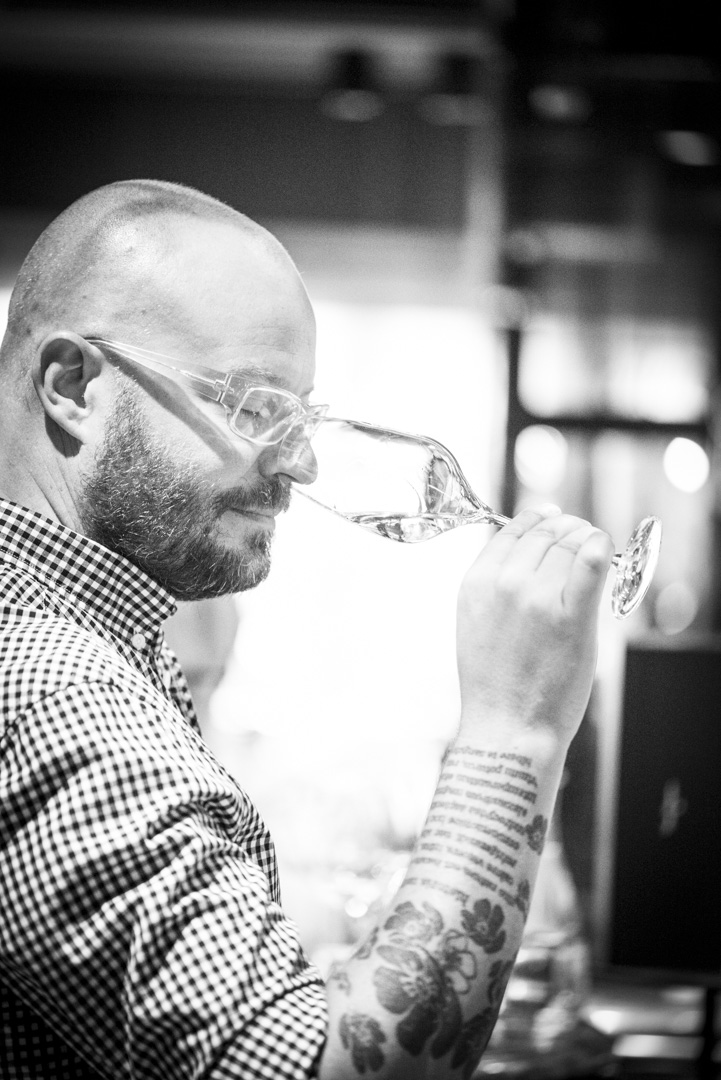
Glassware, temperature, and timing influence perception more than many luxury buyers care to admit. A wine served too cold can mute texture and aromatic detail. A narrow flute can exaggerate bubbles while suppressing complexity. Serious tasting asks for enough bowl shape to allow the wine to speak.
Champagne also rewards patience in the glass. The first pour often gives you only the opening scene. Five minutes later, the wine may widen, deepen, and reveal fruit beneath the autolytic notes. Ten minutes later, some wines become more complete; others lose their line. That arc is part of the assessment.
Food matters too, though not always in the obvious way. Caviar and oysters are classic for good reason, but some of the most instructive pairings are richer or more textural: turbot with beurre blanc, roast chicken, aged Comté, or even a delicate veal preparation. Great Champagne is not merely an aperitif. It is one of the most versatile wines at the table.
Taking notes helps, but only if the notes move beyond generic praise. “Elegant” says very little. Better to ask: Is the finish chalky or creamy? Does the mousse feel fine or aggressive? Is the fruit cool-toned or sunlit? Does the dosage disappear into the wine, or sit on top of it? Precision in language leads to precision in judgment.
Why champagne discovery changes how you buy
Once your palate becomes more structured, purchasing decisions improve almost automatically. You stop buying labels for recognition alone and start buying for style, occasion, and maturity window. You also become less vulnerable to marketing theater.
This does not mean prestige loses its appeal. The greatest prestige cuvees remain among the most thrilling wines in the world. But discovery teaches that prestige is not the only route to greatness, and that some bottles are best bought young for the cellar while others should be sought in mature release. It also teaches restraint. A famous name in a weak release year may offer less pleasure than a lesser-known producer in superb form.
For collectors, this shift is especially valuable. The best cellar is not the most expensive cellar. It is the one built with intent – a balance of immediate pleasure, intellectual range, and bottles with the pedigree to evolve. That requires more than access. It requires perspective.
Champagne Club has long understood that perspective is built through comparison, not noise. The serious drinker does not need more hype. The serious drinker needs better reference points.
The deeper pleasure of champagne discovery
What keeps people returning to Champagne at the highest level is not just luxury, celebration, or rarity. It is the region’s ability to combine beauty with structure, seduction with rigor. Few wines can feel so effortless while carrying so much detail.
That is why discovery never really ends. One month you may be absorbed by the chalk tension of great Chardonnay. The next, by the dark spice and breadth of Pinot Noir from a grand cru hillside. Then an old disgorgement reminds you that time can be the finest winemaker of all.
Taste widely, but compare carefully. Follow producers, not fashion. Let villages teach you. Let mature bottles correct your assumptions. And when a wine stops you mid-sentence, pay attention – that is usually where the next chapter begins.