
A pristine bottle of Champagne can lose its edge long before the cork is pulled, and storage is often the reason. So, can champagne be stored upright? The short answer is yes – but only in certain circumstances. If you plan to hold a bottle for more than a brief period, upright storage is usually not the best choice.
That answer surprises many wine lovers because Champagne sits upright in shops, restaurants, and ice buckets all the time. Yet retail display and long-term cellaring are not the same thing. For collectors, serious enthusiasts, and anyone buying with maturity in mind, bottle position deserves more attention than it usually gets.
Can Champagne Be Stored Upright for Long Periods?
For short-term storage, upright is generally fine. If you have purchased a bottle for a dinner this weekend, a celebration next week, or service over the next month or two, keeping it vertical is unlikely to cause harm, provided the temperature is stable and the bottle is protected from heat and light.
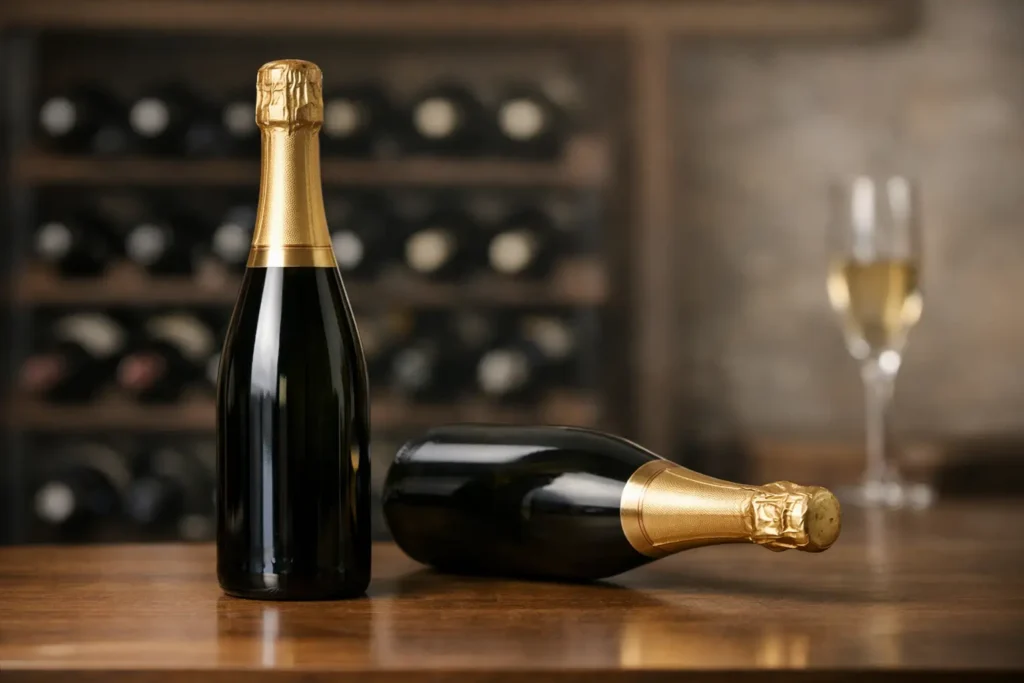
For long-term storage, however, Champagne is better kept on its side. The reason is simple: the cork benefits from remaining in contact with the wine. That contact helps reduce the risk of the cork drying out over time, shrinking slightly, and allowing more oxygen exchange than intended.
With still wine, this principle is familiar. With Champagne, some collectors assume the internal pressure solves the problem on its own. Pressure does help keep the cork pushed firmly into place, but it does not eliminate the effects of age, cellar conditions, and cork integrity. Over years rather than weeks, horizontal storage remains the safer and more traditional option.
Why Bottle Position Matters in Champagne
Champagne is a more delicate storage subject than many people realize. The wine lives not only through flavor but through pressure, mousse, and aromatic tension. A storage mistake may not ruin the bottle outright, yet it can soften the very qualities that make great Champagne thrilling.
Cork condition
Natural cork is still a living variable in fine wine. If a bottle stands upright for too long in a dry environment, the exposed end of the cork can gradually lose elasticity. Once that seal becomes less reliable, tiny amounts of oxygen may enter, and freshness can fade faster than expected.
In prestige cuvées and mature vintages, that matters enormously. The finest Champagnes are built on precision – citrus oil, chalk, white flowers, red fruit nuance, smoke, toast, salt, and energy. Even modest oxidation can blur those details.
Pressure and mousse retention
Champagne’s dissolved carbon dioxide is part of its architecture. If the seal is compromised, pressure can diminish very slowly over time. The bottle may still open with a pleasing sound, but the palate can seem less vivid, less tensile, and less alive.
This is one of the quiet disappointments of poor storage. The wine is not obviously spoiled. It is simply less noble than it should have been.
Sediment and presentation
There is one practical point in favor of upright storage: sediment settles neatly at the base of the bottle. This can be useful for older bottles shortly before service, especially if they have been moved. But that is a short-term tactic, not a long-term aging philosophy.
When Upright Storage Is Perfectly Acceptable
There are plenty of situations where upright storage is not only acceptable but entirely sensible. A non-vintage brut intended for near-term drinking does not need the ritual seriousness of a deep cellar. If the bottle will be opened soon, temperature and light matter more than whether it is standing or lying down.
This is especially true in homes where space is limited. A few bottles in a cool wine fridge, stored upright for several weeks, present no real issue. Likewise, restaurants often hold Champagne vertically for service convenience, and reputable merchants may display bottles upright because it is visually cleaner and commercially practical.
What matters is duration. Days, weeks, and even a few months are one thing. Years are another.
When You Should Avoid Storing Champagne Upright
If you are buying vintage Champagne, prestige cuvées, large formats, or bottles intended for cellaring, do not rely on upright storage. The more serious the bottle and the longer the horizon, the more important side storage becomes.
This is especially relevant for collectors who buy on release and intend to follow evolution over a decade or more. Champagne develops magnificently with time when stored properly. It gains breadth, depth, savory complexity, and a more profound textural weave. But that promise depends on stable conditions and a sound closure.
You should also avoid long-term upright storage if your environment is dry. Low humidity can be unkind to cork over extended periods. Even in a temperature-controlled room, very dry air increases risk.
The Bigger Issue: Storage Conditions Matter More
Bottle position matters, but it is not the first variable to fix. If a bottle is stored horizontally in a warm kitchen, near vibration, or under bright light, that sideways position will not save it. Champagne responds best to a cool, dark, still environment with minimal temperature fluctuation.
The ideal range is generally around 50 to 54 degrees Fahrenheit. Slight deviations are manageable, but consistency is essential. Heat accelerates aging. Repeated swings in temperature can stress both wine and closure. Sunlight and strong artificial light are unwelcome, particularly over time.
Vibration is often overlooked. A collector’s cellar or wine cabinet should be calm. Constant movement is not catastrophic in the short run, but for long-term aging it is best avoided.
If you can achieve those fundamentals, then bottle orientation becomes the finishing detail rather than the emergency.
Can Champagne Be Stored Upright in a Wine Fridge?
Yes, if the wine fridge is being used for short-term holding. Many modern wine fridges are designed with shelf formats that make upright storage convenient, especially for open bottles with sparkling stoppers or for bottles awaiting imminent service.
For long-term storage, though, a wine fridge is best used with bottles lying on their side whenever possible. If the shelves do not permit that easily, it may be worth reconsidering how serious your aging ambitions are. There is no point buying top grower Champagne or grand marque prestige cuvées for future maturity only to compromise them with a poor storage setup.
Collectors tend to obsess over disgorgement dates, dosage levels, village sources, and élevage decisions. They are right to do so. But basic physical care of the bottle is part of connoisseurship too.
What About Opened Champagne?
Opened Champagne should be stored upright in the refrigerator with a proper sparkling wine stopper. Once the bottle has been opened, the old question about keeping the cork moist no longer applies in the same way. At that stage, the immediate priority is preserving pressure and freshness for the next day or two.
Even then, expectations should be realistic. Some wines hold beautifully overnight, especially young, high-acid styles with strong structure. Others lose sparkle and aromatic lift more quickly. Fine Champagne is at its most expressive when freshly opened and served with attention.
A Sensible Rule for Collectors and Enthusiasts
If you need a practical rule, use this one: store Champagne upright only if you plan to drink it soon. If the bottle is destined for aging, store it on its side in a cool, dark, stable environment.
That approach covers nearly every scenario without becoming fussy for the sake of it. It respects both the mechanics of cork and the elegance of the wine itself.
The best bottles of Champagne are not ordinary beverages. They are cultural artifacts, agricultural expressions, and some of the most precise wines in the world. At Champagne Club, that is exactly why storage deserves the same seriousness as selection. A little care before the cork is pulled preserves everything you paid for – the tension, the perfume, the texture, and that fleeting brilliance in the glass.
If a bottle matters enough to save, it matters enough to store well.