
The best champagne food pairings rarely begin with a recipe. They begin with structure. Acidity, dosage, texture, autolytic depth, and mousse decide whether a dish will sing or flatten the wine. That is why Champagne can move so effortlessly from oysters to fried chicken, from caviar to Comté, yet fail completely beside the wrong sauce.
For serious drinkers, pairing Champagne is less about the old clichés and more about precision. A taut Blanc de Blancs from the Côte des Blancs behaves very differently at the table than a broad, pinot-led vintage wine from Aÿ or Ambonnay. Rosé with gentle tannic grip opens another set of possibilities. Mature Champagne, especially from structured vintages, belongs in a different conversation altogether.
Best champagne food pairings start with style
If there is one mistake even experienced hosts make, it is treating Champagne as a single category. The pairing logic changes with each style.
Non-vintage Brut is the most flexible. Good examples carry enough freshness for raw seafood, enough autolytic character for pastry and fried textures, and enough fruit to avoid feeling severe. This is the bottle for canapés, gougères, sushi, and lightly creamy starters.
Blanc de Blancs, especially from chalk-rich grand cru villages, is often the sharpest tool in the drawer. It excels where salinity, delicacy, and mineral precision matter most. Think oysters, scallop crudo, sashimi, and simply dressed white fish. The point is not force. It is clarity.
Blanc de Noirs tends to have more breadth, more vinous depth, and often a more persuasive partnership with roast poultry, mushrooms, and richer shellfish. If the dish carries browned notes or deeper umami, pinot-driven Champagne usually has more to say.
Rosé Champagne remains one of the most misunderstood styles at table. The best examples are not merely aperitif wines. Their red-fruit profile, subtle phenolic structure, and often fuller body make them excellent with tuna, duck, salmon, and dishes that would overpower a stricter blanc.
Vintage and late-disgorged wines ask for more thoughtful company. Age brings truffle, hazelnut, coffee, smoke, and mushroom notes. At that point, pairing should move away from briny simplicity and toward noble savory complexity.
Oysters, caviar, and raw seafood
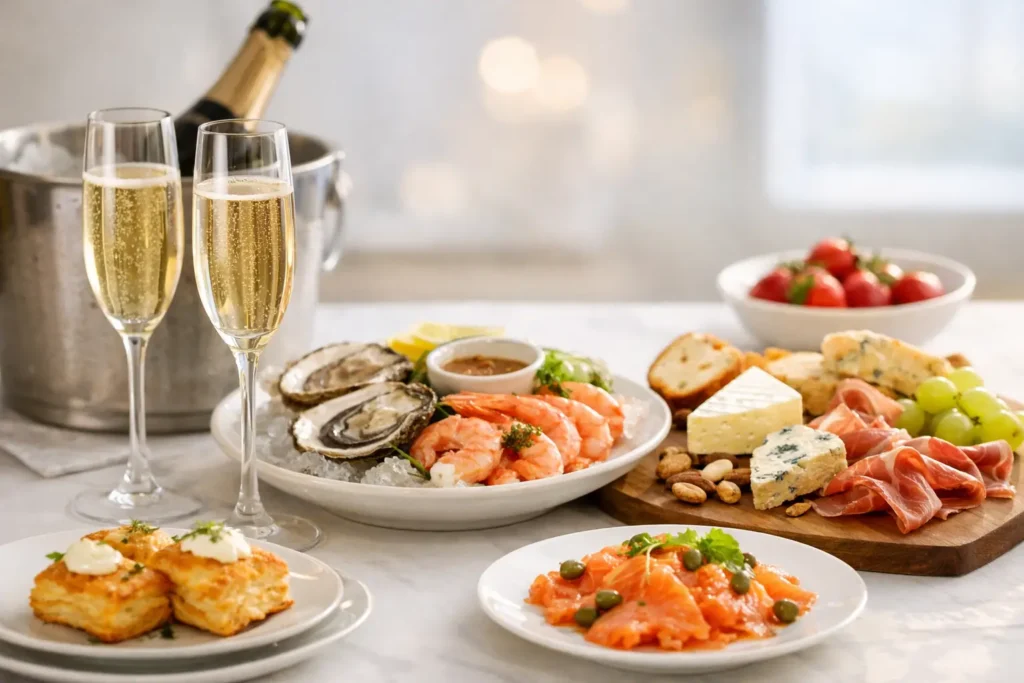
The classic pairing survives because it works. Oysters and young Brut or Extra Brut Champagne share a saline, high-acid architecture that feels almost geological. The wine cuts through the oyster’s creaminess while echoing its iodine freshness.
That said, not every oyster wants the same bottle. Lean, citrus-toned Blanc de Blancs suits pristine East Coast oysters beautifully. Fleshier, sweeter oysters can work with a rounder Brut, particularly if the base wine includes some reserve wine and time on lees.
Caviar is more nuanced than the cliché suggests. With very fine caviar, the best match is often a low-dosage Champagne with superb texture rather than an aggressively austere one. You want lift and detail, but also enough mid-palate generosity to meet the butter, crème fraîche, or warm blini usually involved. A mature prestige cuvée can be extraordinary here, though a top non-vintage wine with significant lees aging is often more versatile.
For sashimi, crudo, and tartare of sea bream or tuna, the key is restraint. Avoid heavily oxidative bottles or wines with too much oak influence. The clean lines of Blanc de Blancs or a refined Brut Nature keep the fish at center stage.
Why fried food is one of the best champagne food pairings
Few pairings are more crowd-pleasing than Champagne and fried food, and the reason is technical rather than trendy. Acidity refreshes the palate, bubbles scrub away fat, and autolytic notes mirror crust and toast.
Fried chicken is the famous example, but tempura, croquettes, calamari, and even excellent French fries can work brilliantly. The best bottle here is rarely the sternest. You want enough fruit and body to stand up to salt, oil, and crunch. A generous Brut non-vintage or a pinot-led blend is usually more convincing than a razor-sharp zero dosage wine.
This is also where rosé earns its place. Fried quail, spicy fried shrimp, or karaage with a little heat can find better balance with rosé Champagne than with blanc styles. The faint red-fruit character softens spice without turning sweet.
Cheese pairings that actually work
Cheese and Champagne can be sublime, but the pairing is less universal than many assume. Strong blue cheeses often bully the wine. Very runny washed-rind cheeses can also create awkward metallic notes.
The safest and most rewarding direction is hard, aged cheese. Comté is a benchmark because its nuttiness, sweetness, and crystalline texture link beautifully with the toasted, creamy complexity that develops in fine Champagne. Parmesan and aged Gouda can also be striking, especially with vintage wines that have had time to gain breadth.
Triple-cream cheeses create a different kind of pleasure. Brie de Meaux or Brillat-Savarin with a lively Brut can be seductive because the acidity slices through the richness so neatly. If the Champagne is mature and broad, the result can feel almost decadent.
Goat cheese, particularly fresh styles, prefers sharper wines. A chalky Blanc de Blancs with citrus energy can make the pairing feel precise and alive.
Poultry, mushrooms, and richer main courses
Champagne is often underestimated with main-course cooking. That is a mistake, especially once you move into vintage wines, Blanc de Noirs, or prestige cuvées with real structure.
Roast chicken is one of the great underappreciated pairings in wine. The bird’s gentle flavor, crisp skin, and savory juices allow Champagne’s finesse to show. A mature vintage Brut, or a vinous non-vintage with reserve wines, can be far more compelling than many still whites.
Turkey, guinea fowl, and veal work for similar reasons. Cream sauces can be successful if they are not too heavy or sweet. Mushroom-based dishes are particularly good with older Champagne because the wine’s autolytic and tertiary notes begin to echo the earthy tones on the plate.
Duck sits at the threshold. Rosé Champagne works beautifully with duck breast served pink, especially if the garnish includes cherries, beets, or a lightly reduced jus. But if the preparation turns sweet, sticky, or aggressively spiced, the pairing becomes less secure.
Sushi, spice, and where pairings get tricky
Champagne is famously versatile with Japanese cuisine, but precision matters. Clean nigiri and sashimi pair effortlessly with Blanc de Blancs and fine Brut. Fatty tuna can support something broader and more layered. Uni is divisive. At its best, with a very pure Champagne, it is luxurious. With the wrong bottle, it can turn metallic and heavy.
Spice is where many hosts overestimate Champagne’s adaptability. Dry Champagne does not love high heat. Chili can make the wine seem harder, leaner, and more acidic. If you are serving mildly spiced dishes, rosé or a softer Brut with a touch more dosage can cope well. But for truly hot cuisine, Champagne is often a stylish compromise rather than a perfect match.
Sweetness is another fault line. Brut Champagne generally struggles with desserts unless the dessert is barely sweet. Fresh strawberries may flatter rosé aesthetically, but the pairing often works better in photographs than on the palate. If dessert must be included, go toward fruit tarts with restrained sugar, almond pastries, or aged hard cheeses instead.
How to think like a sommelier about Champagne at the table
The smartest way to choose among the best champagne food pairings is to stop asking whether Champagne matches the ingredient and start asking whether it matches the dish’s dominant sensation. Is the plate driven by salinity, fat, smoke, sweetness, acid, umami, or spice? Champagne thrives with salt, fat, and subtle umami. It becomes less comfortable with overt sweetness, intense chili heat, or aggressive vinegar.
Texture matters just as much. Raw, silky foods want refinement. Crisp, fried foods welcome more exuberance. Creamy dishes need acidity. Roasted dishes can handle age and pinot breadth.
This is where expertise begins to separate good pairings from memorable ones. A young stainless-steel-leaning Blanc de Blancs and a mature oak-influenced vintage cuvée may both be Champagne, but they do not belong with the same plate. Serious hosts understand that the category is not one wine but many.
For readers who want to refine that instinct further, Champagne Club offers the rare advantage of deep comparative tasting context across producers, vintages, and styles. That is how pairing stops being guesswork and becomes judgment.
If there is one principle worth keeping close, it is this: the finest Champagne pairings are not about luxury for its own sake. They are about tension, resonance, and timing – when a great wine and a well-chosen dish make each other taste more exact.