

A great bottle can feel strangely muted in the wrong stemware. If you have ever poured a serious Champagne into a narrow flute and wondered where the depth went, you have already encountered the real answer to what glass is best for Champagne: it depends on what you want to experience, but the old flute is rarely the best choice.
For decades, Champagne service was driven by theater. The coupe looked glamorous, the flute looked festive, and both became shorthand for celebration. Yet neither was designed to show Champagne at its most articulate. Fine Champagne is not just bubbles. It is wine first – built from fruit, terroir, élevage, acidity, texture, and aromatic complexity. The best glass respects all of that.
What glass is best for Champagne today?
For most quality Champagne, the best all-around choice is a tulip-shaped Champagne glass or a well-proportioned white wine glass. Both give the wine enough room to open aromatically while preserving freshness and lift. That balance matters far more than creating the tallest possible stream of bubbles.
A tulip glass narrows slightly at the rim and broadens through the bowl. This shape captures aroma, directs the wine to the palate with more precision, and still supports an elegant bead. It is usually the safest answer for non-vintage blends, vintage Champagnes, and many rosés.
A white wine glass can be even better for mature, complex, or oak-influenced Champagne. Blanc de Blancs with serious chalky tension, old-vine Blanc de Noirs, and prestige cuvées with bottle age often gain authority in a larger bowl. You smell more. You taste more layers. The texture feels more complete.
The trade-off is straightforward. As the bowl gets larger, visual effervescence can seem less dramatic. That does not mean the wine is less alive. It means you are shifting the emphasis from spectacle to expression.
Why the flute is no longer the default
The flute remains popular because it looks elegant and keeps bubbles visually concentrated. For a quick aperitif or a crowded reception, it still has practical value. It is easy to hold, easy to carry, and familiar to guests.
Its weakness is aromatic compression. The narrow bowl limits oxygen exposure, which means less release of the scents that make serious Champagne compelling. Autolytic notes such as brioche, hazelnut, toast, and pastry cream stay subdued. So do subtler floral, citrus, orchard fruit, spice, and mineral tones. Texture can also feel more linear than it truly is.
That is a problem if you are pouring growers’ Champagnes, vintage wines, single-parcel bottlings, or prestige cuvées. These wines are built to speak in full sentences. A flute often reduces them to a headline.
This shift in glassware preference is not a passing trend from sommeliers trying to be provocative. It reflects a more accurate understanding of Champagne as one of the world’s most complex wines.
The coupe: beautiful, but rarely ideal
The coupe still has charm. It carries the glamour of old-world entertaining and remains irresistible for certain moments, especially towers and festive settings. But as a tasting glass, it is deeply compromised.
Its wide, shallow shape dissipates bubbles quickly and lets aromas escape almost immediately. Temperature rises faster as well. The result is a wine that can seem broad, flat, and fleeting.
There are exceptions. A coupe can be fun for a light, youthful Champagne at a party where mood matters more than analysis. It also suits some Champagne cocktails. But if your goal is to understand the bottle, the coupe is almost never the answer.
When a tulip glass is best for Champagne
If you want one versatile shape for most situations, choose the tulip. It offers the middle path between a flute’s focus and a white wine glass’s breadth.
This is where non-vintage brut often performs best. The classic house style of major producers – built around freshness, consistency, and layered blending – tends to show beautifully in a tulip. You get citrus, apple, chalk, and pastry notes with enough mousse definition to preserve the sense of occasion.
Rosé Champagne also benefits from this shape. The bowl allows red fruit notes to emerge, while the slight taper keeps the wine energetic rather than diffuse. The same goes for many vintage wines that have tension and detail but do not need the full width of a larger white wine bowl.
For restaurants and private hosts, the tulip is often the smartest luxury choice because it pleases both the eye and the palate. It still reads as Champagne stemware, yet it serves the wine with far more intelligence than the standard flute.
When a white wine glass is better
Serious Champagne can behave astonishingly well in a white wine glass. This is especially true for bottles with age, concentration, vinous depth, or a pronounced influence from reserve wines and oak.
A mature vintage Champagne may smell restrained in a flute, then suddenly reveal smoke, truffle, dried citrus, almond, and warm bread in a white wine bowl. A powerful Blanc de Noirs can gain dimension and authority. A top Blanc de Blancs can show not just lemon and chalk, but creaminess, salt, flowers, and an almost architectural sense of structure.
This does not mean any oversized glass will do. A huge bowl can make delicate wines feel loose and warm too quickly. The best white wine glasses for Champagne are moderately sized, with enough taper at the top to keep aromas gathered rather than scattered.
For collectors and experienced tasters, this is often the glass that closes the gap between drinking Champagne and reading it properly.
Matching the glass to the style of Champagne
There is no single universal answer because Champagne itself is not a single style. Young, brisk, citrus-led non-vintage brut asks for something different than an aged prestige cuvée from magnum.
Delicate aperitif styles generally benefit from a smaller tulip. Richer wines with lees age, barrel influence, or maturity can move into white wine territory. Rosé usually prefers enough bowl width to show fruit but not so much that the wine loses shape. Demi-sec and richer styles can also gain from a slightly broader bowl, since sweetness and texture need room to integrate.
Temperature matters here too. The colder the wine, the more muted the aromatics. If you serve Champagne too cold in a narrow flute, you are effectively putting two barriers between yourself and the wine’s character. Better stemware cannot fix an ice-cold serving temperature entirely, but it helps.
Details that matter more than most people think
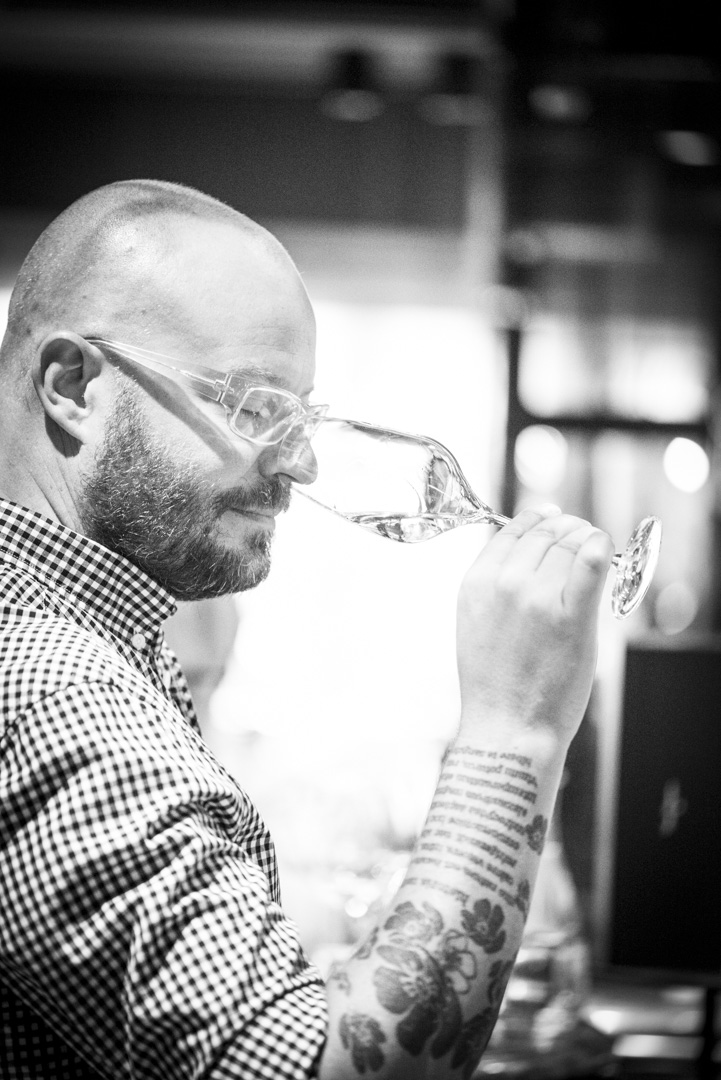
The best Champagne glass is not just about silhouette. Rim diameter, bowl depth, and overall proportion all matter. A thin rim generally feels finer and less intrusive. A bowl with enough volume allows a gentle swirl, which is crucial for aromatic release. A subtle nucleation point can encourage a steady bead without turning the glass into a gimmick.
Material matters as well. Fine crystal or high-quality glass tends to feel more precise in the hand and on the palate. This is not only about luxury signaling. Better glassware often has better balance, thinner rims, and cleaner shaping, all of which improve the drinking experience.
Cleanliness is equally important. Residue from detergent or polishing can flatten the mousse and distort aroma. A world-class bottle in a poorly washed glass can underperform as surely as it would in the wrong shape.
So what should you actually buy?
If you are building a serious home setup, start with tulip glasses. They are the most versatile and the most consistently flattering across styles. If you drink mature or high-end Champagne regularly, add a set of refined white wine glasses. Keep a few flutes only if you enjoy them for receptions or purely celebratory service.
For most enthusiasts, this simple approach covers nearly every occasion. Tulips for broad versatility, white wine glasses for contemplation, flutes for atmosphere when analysis is not the point.
That may sound less romantic than the old iconography of the flute, but it reflects a more elevated kind of pleasure. Champagne deserves to be seen not merely as sparkling ritual, but as one of the most profound wine categories in the world. At Champagne Club, that distinction matters.
The right glass will not turn an average bottle into a great one. It will, however, allow a great Champagne to arrive with its full poise intact – aroma first, texture next, and then that long, refined finish that reminds you why the pinnacle of effervescence is still wine at heart.