Read the Pinot Meunier story from Champagne Club by Richard Juhlin [ read the full champagne story ]
Estimated reading time: 4 minutes

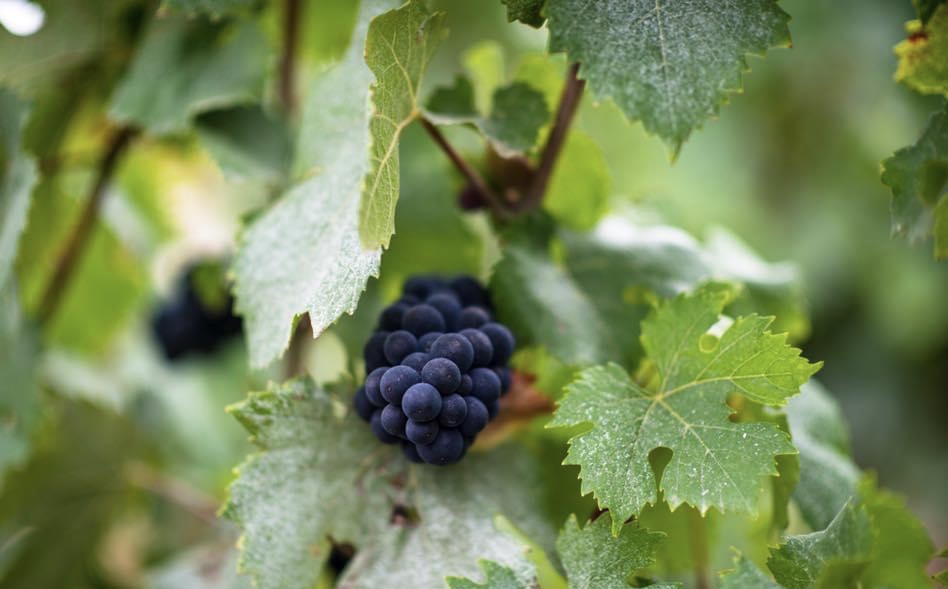
There is a tedious, lingering snobbery in Champagne that treats Pinot Meunier like the scruffy younger brother who isn’t invited to the garden party. For decades, the “men in suits” at the big houses dismissed it as a mere “blending grape,” a utilitarian workhorse used to add a bit of fruit and early-drinking “flesh” to the more “aristocratic” Pinot Noir and Chardonnay. It was the grape of the “vinous tourist”—something to be hidden away in the shadows of the cellar.
But as TheChampagneSommelier, I’ve watched the tectonic plates of the region shift. We are currently witnessing a coup d’état. A small band of obsessive, dirt-under-the-fingernails growers has taken this “service grape” and turned it into the most intellectually stimulating, structurally defiant category in the region: the 100% Pinot Meunier Blanc de Noirs.
To drink these wines is to experience “emotion and light” in its rawest, most unadulterated form. Forget the “solar and generous” fluff; we are talking about structure, energy, and a persistent mineral finish that would make a Grand Cru Chardonnay blush with envy.
The High Priests of Meunier
Jérôme Prévost (La Closerie – Les Béguines)
If Meunier has a god, his name is Jérôme. Based in Gueux, on the northwestern edge of the Montagne de Reims, Prévost produces Les Béguines—a wine that defies every cliché. It is a dialogue between place and grape, where the old-vine Meunier finds its “rightful place, free from excess or artifice”. It isn’t just a drink; it’s an interrogation of the soil. It’s dense, it’s vinous, and it possesses a “depth and texture” that requires a “patient and respectful approach”.
Egly-Ouriet (Vignes de Vrigny)
Francis Egly is a man who treats his vineyards with a “demanding vision” that borders on the devotional. His Vignes de Vrigny is 100% Meunier from the Premier Cru of Vrigny. It spends years in the “quiet darkness” of his cellars, reaching a “perfect harmony and balance” that most houses can’t achieve with Pinot Noir. It is “structured and generous,” offering a “solar expression” balanced by the “freshness and salinity” of the terroir.
Nicolas Maillart (Mont Martin – Single Parcel)
Maillart is a master of “precision and energy”. His Meunier-driven cuvées are “chiselled and linear,” reflecting a “philosophy that always places wine at the heart of its decisions”. These are wines of “tension and structure,” where the fruit is secondary to the “persistent mineral backbone”.
Chartogne-Taillet (Les Barres)
Alexandre Chartogne is a philosopher of the vine. His Les Barres is a 100% Meunier from ungrafted vines—a “return to the essence” of Champagne before the phylloxera plague. It is a wine of “emotion and light,” shaped for “longevity and memory”. To drink it is to step back in time while remaining “fully anchored in its time”.
The New Frontier: Alfred Gratien ‘Clos Le Village’ 2018
The big houses are finally waking up. Even Alfred Gratien, that bastion of traditionalism, has entered the fray with Clos Le Village 2018. Sourced from a tiny, “singular cuvée” plot in Epernay, this is Meunier treated with the “standards of excellence” usually reserved for the founding Grand Crus.
It is a “solar and generous expression,” perfectly balanced by the “freshness and salinity” of its micro-terroir. It offers “yellow fruits, candied citrus, and acacia honey,” leading to a finish that is “mineral and persistent”. It is an “assumed continuity” of the house style, but with a “more modern silhouette”.
The Sommelier’s Verdict
The rise of 100% Meunier is not a “look backward”; it is the expression of an “assumed continuity” for a region that is finally learning to respect all its children. These are wines of “structure and energy,” made by “the human hand” for those who understand the “övertänkt smak”—the thoughtful taste.
For the love of all that is holy, do not serve these ice-cold. You want them at 9-12°C. Use a proper glass with “precision”. You need space to breathe in the “emotion and light” of a grape that has finally, triumphantly, come out of the shadows.