
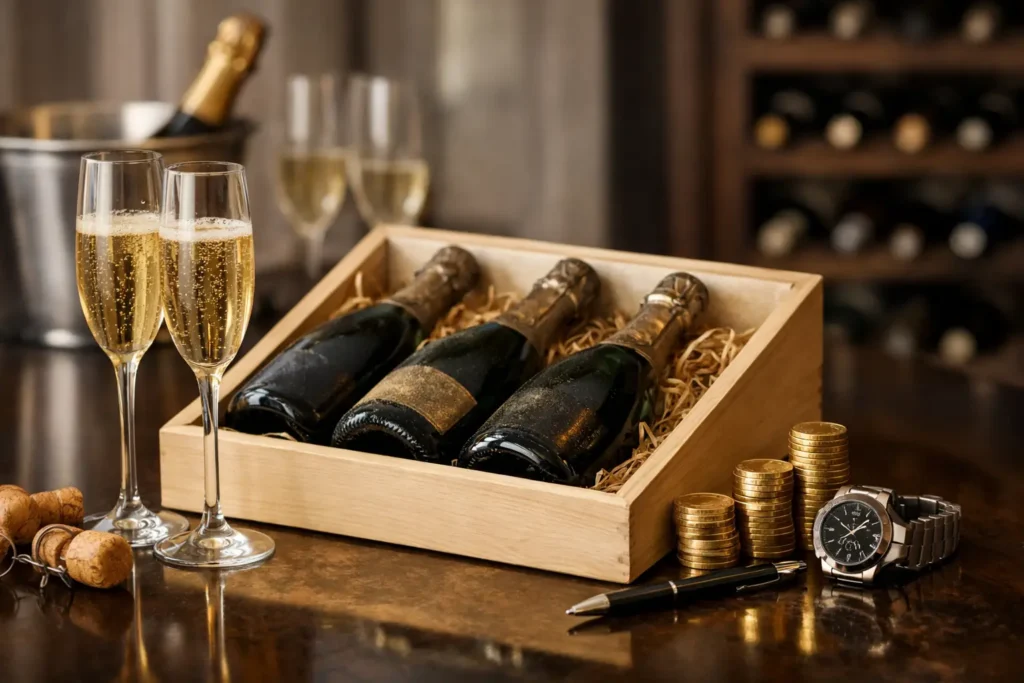
A case of Champagne can deliver pleasure, status, and scarcity at once. That combination is exactly why so many collectors approach the category with mixed motives – part passion, part portfolio. A proper champagne investment guide begins there, with a clear-eyed distinction between buying bottles you admire and buying bottles you expect to outperform.
Champagne is not Burgundy, and it is not Bordeaux. The market behaves differently. Production is broader, prestige branding matters more, and release strategies can distort price discovery for years. Yet the best investment bottles share familiar traits: real scarcity, strong provenance, global demand, critical credibility, and the ability to remain desirable long after release. If you want to read good, drink better, and still buy intelligently, Champagne rewards precision.
What makes Champagne investment-worthy?
Not every famous label is a compelling asset. In Champagne, brand recognition can support value, but investment quality usually rests on a tighter mix of variables. The first is producer strength. Houses with enduring global demand, disciplined release histories, and a reputation for cellar-worthy prestige cuvees tend to fare better than brands driven mainly by marketing heat.
The second is wine quality across time. A prestige cuvee that excels only on launch can lose momentum. Bottles that continue to develop beautifully over 10, 15, or 25 years earn a different class of buyer confidence. This is where tasting history matters. Deep back-vintage knowledge often reveals whether a wine is merely expensive or genuinely collectible.
Scarcity also requires nuance. Limited production helps, but scarcity alone is not enough. The market rewards bottles that are both hard to find and widely desired. A tiny release from an obscure producer may remain tiny and obscure. By contrast, a tightly allocated prestige cuvee from a house with worldwide distribution can sustain stronger secondary demand because more collectors are already paying attention.
A champagne investment guide starts with the right categories
Most serious buyers begin with prestige cuvees from the leading houses. This is not because smaller growers lack quality. Many do not. It is because investment markets tend to favor labels with broad recognition, established auction presence, and international liquidity.
Dom Pérignon, Krug, Louis Roederer Cristal, Salon, Pol Roger Sir Winston Churchill, Bollinger R.D., and selected releases from Jacques Selosse often sit at the center of collector demand. Some of these wines trade because of iconic status. Others trade because supply is chronically tight relative to elite-level interest. The point is not to chase only famous names, but to understand why those names repeatedly attract buyers.
Vintage Champagne generally offers clearer investment logic than non-vintage releases. The story is easier to tell, the comparability is stronger, and the aging arc is easier for collectors to follow. That said, there are exceptions. Krug Grande Cuvée, for example, has tremendous intellectual and drinking appeal, but its investment case depends more on edition-specific demand and packaging than on a classic vintage narrative.
Large formats deserve attention as well. Magnums and jeroboams often carry greater rarity and stronger appeal among collectors, private clients, and top restaurants. They can appreciate well, especially when sourced on release and stored perfectly. But they are also less liquid than standard bottles, so the upside comes with a narrower buyer pool.
Producer reputation matters, but timing matters more
One of the most expensive mistakes in Champagne collecting is confusing a great wine with a great entry point. A brilliant bottle bought at a swollen retail premium may underperform for years. A more disciplined purchase, secured on release or before broad critical momentum builds, can look far smarter.
Release timing in Champagne is unusually important because the top houses control inventory carefully. Some wines arrive with immediate fanfare, while others gain status through slow recognition and visible evolution in bottle. Late-disgorged wines, library releases, and special editions can complicate pricing. Sometimes they offer opportunity. Sometimes they simply price in exclusivity from day one.
Collectors should also watch vintage hierarchy without becoming captive to it. Legendary years attract obvious demand, but they also attract obvious pricing. Less celebrated vintages from top producers can offer a more favorable ratio of quality to market expectation. In practice, that often means the better investment is not the bottle everyone is already talking about, but the one with room for reevaluation.
Provenance is where returns are protected
In fine wine, provenance is never a detail. In Champagne, it is especially decisive because poor storage can flatten freshness, erode mousse, and diminish the very character that gives mature bottles their appeal. A luxury label cannot rescue a tired wine.
For investment-grade Champagne, original source matters. Buying from reputable merchants, direct allocations, and trusted cellars reduces both fraud risk and condition risk. Fill level, label condition, capsule integrity, disgorgement information when available, and original packaging all influence resale confidence. For top bottles, original cases and complete documentation can materially affect value.
Storage should be treated as part of acquisition cost, not an optional afterthought. Temperature stability, darkness, humidity control, and minimal movement are basic requirements. If your goal is eventual resale, professional storage is often the sensible route. It costs money, but it also preserves the credibility of your cellar.
How to build a Champagne investment portfolio
The most effective champagne investment guide is not about buying one trophy bottle and hoping the market agrees. It is about building a coherent group of holdings with different demand profiles.
A practical starting point is a core of blue-chip prestige cuvees from major houses, complemented by a smaller allocation to rarer grower or cult-producer wines where supply is unusually constrained. The core provides liquidity and recognition. The selective fringe provides asymmetrical upside, though usually with more volatility.
Vintage spread matters too. If all your purchases come from the same celebrated year, your portfolio becomes too dependent on one market narrative. A mix of strong but differently perceived vintages can smooth that risk. Format mix can help in the same way. Standard bottles may be easier to trade, while larger formats can serve as longer-duration positions.
Quantity matters more than many buyers expect. Single bottles are wonderful for personal pleasure, but investment logic improves when you hold enough stock to give yourself options. A six-bottle or twelve-bottle position lets you sell part of an allocation while keeping some for drinking or further aging. That flexibility is valuable.
Risks that collectors often underestimate
Champagne investing has romance, but it also has friction. The first risk is liquidity. Compared with leading categories of still wine, some Champagne labels trade in thinner volumes. You may own a magnificent bottle and still wait longer than expected for the right buyer.
The second risk is hype. A surge of enthusiasm around one producer or disgorgement can create short-term pricing that outpaces long-term demand. Collectors who buy only because a wine feels impossible to obtain often discover that scarcity and resale strength are not identical.
The third risk is fees. Storage, insurance, auction commissions, brokerage margins, shipping constraints, and taxes all eat into returns. Champagne can absolutely appreciate, but net gain matters more than headline sale prices.
There is also style risk. Tastes change. Richly oxidative wines, laser-cut low-dosage bottlings, and monumental house styles each have loyal audiences, but market preference can rotate. Buying across stylistic expressions may be wiser than concentrating entirely in one aesthetic camp.
Research is the edge
Collectors who do best in Champagne usually know more than the market assumes. They understand disgorgement context, release cadence, dosage shifts, bottle variation, and the difference between broad prestige and deep connoisseur demand. They follow producers over years, not headlines over weeks.
This is where specialist data becomes decisive. Broad wine coverage rarely captures the subtleties that influence Champagne value over time. Back-vintage tasting notes, producer track records, and release history offer a sharper lens on what is likely to mature into true collector demand. For buyers serious about category depth, platforms such as Champagne Club provide precisely that kind of specialist perspective.
Champagne remains one of the most seductive categories in fine wine because it offers more than financial possibility. It offers cultural weight, celebratory meaning, and extraordinary longevity when chosen well. Buy with discipline, favor provenance over excitement, and let your best bottles earn their place twice – once in the cellar, and once in the glass.