
Or shall we call it ‘The Richards’ ?! Instead of ‘The Champagne Oscars’ ? We want to sum-up the year of 2025 from a Champagne perspective. In 20+ categories we hand out awards for this years most memorable Champagnes & Champagne related topics! [ read the full champagne story ]
Estimated reading time: 2 minutes
Historical winners
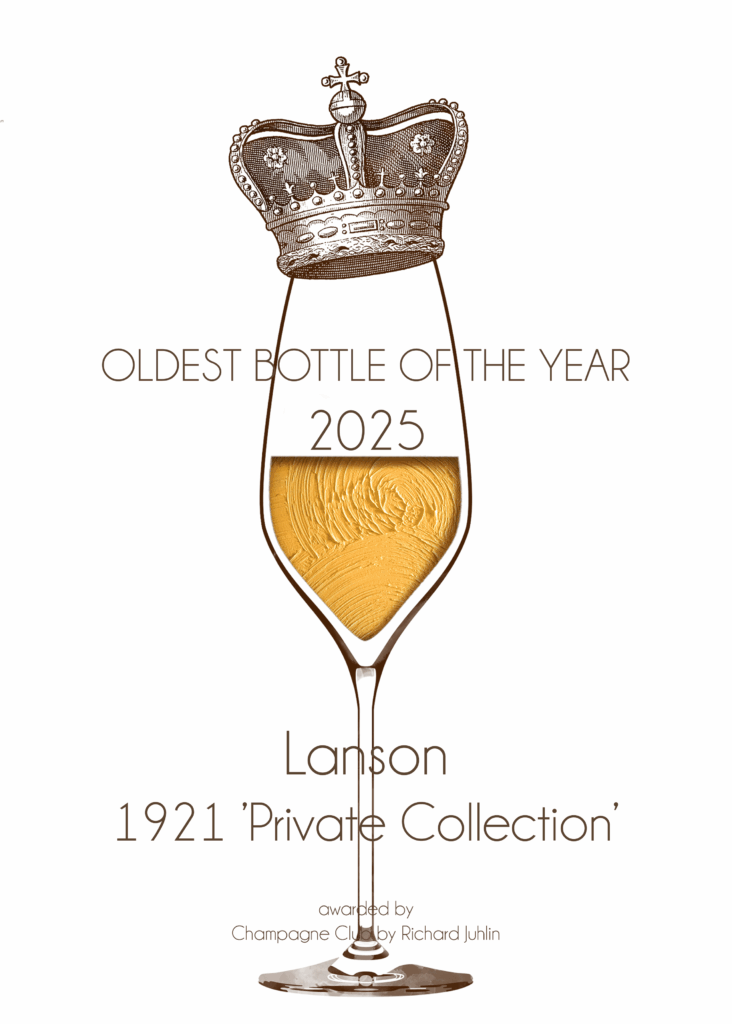
| 2025 | 1921 Lanson ’Collection’ |
| 2024 | 1949 Heidsieck & Monopole ’Millésime’ |
| 2023 | 1952 Abel Lepitre ‘Millésime’ |
| 2022 | 1921 Pol Roger ’Millésime Vinothèque’ |
| 2021 | 1921 Moët & Chandon ‘Grand Vintage Collection’ |
| 2020 | 1911 Heidsieck & Monopole ’Vinothèque’ |
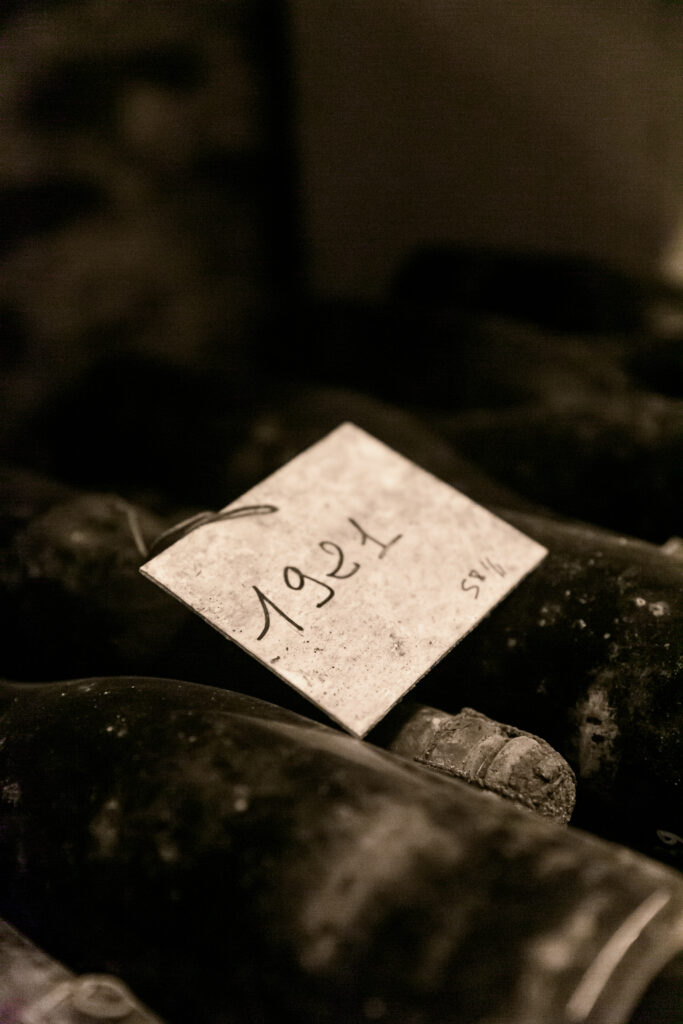
Oldest bottle of the Year
1921 Lanson ‘Private Collection’
55PN 45CH
96(96)p
TASTING NOTE by Champagne Club by Richard Juhlin ‘Grapes from Verzenay, Bouzy, Oger, Avize and Cramant this time from an extremely low harvest in this legendary and perfect year. So vintage-typical and delicious. It doesn’t last quite as well in the glass as Pol Roger, Pommery and Moët, but is very similar to these and appears first and foremost as delightfully concentrated and creamy caramel-tinged. I must admit that I was a little irritated when people around our long table of international connoisseurs talked about oxidation, Dry Martini and cherry wine about this ultra-classic wine. 97 points initially in the glass. Cream caramel, roasted coffee beans, Cox orange apples, brioche, pineapple, dried apricots, honey, buttery chardonnay and deep Burgundian Pinot Noir in perfect balance. But probably at its best just before the 100-year stretch in regular bottles and unfortunately no magnums were made of this treasure.’
‘a symphony of time encapsulated in a bottle’
TheChampagneSommelier
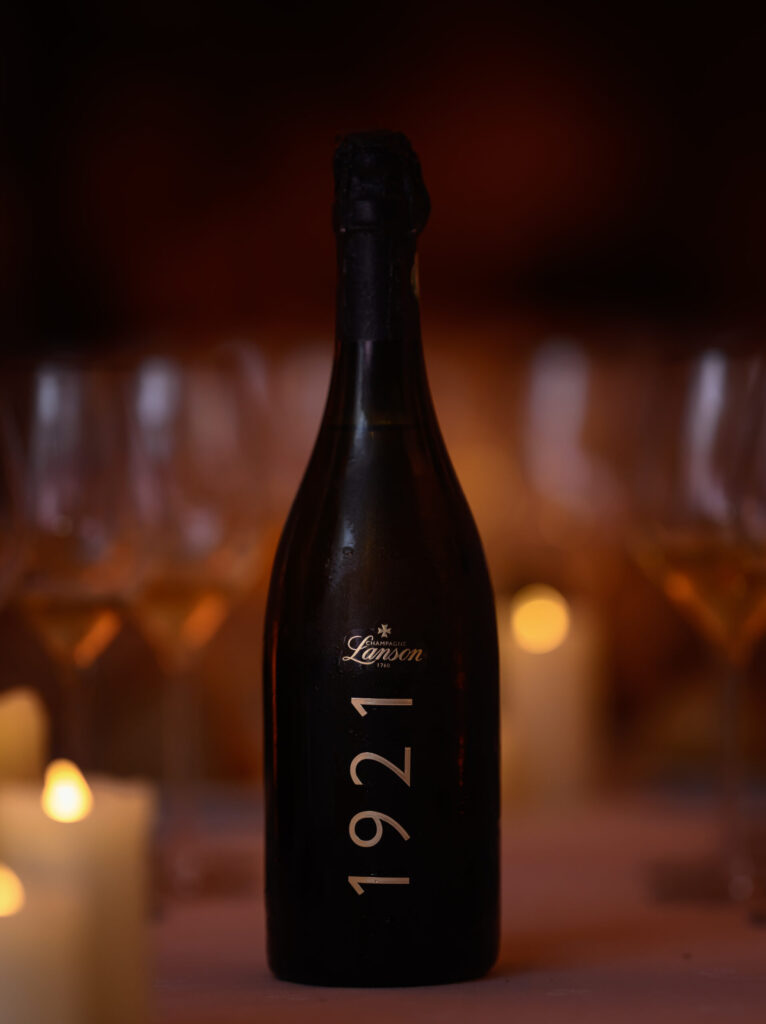
1921
La Légende
And then the finale. 1921 – La Légende. A century of history in a single glass. A vintage as much myth as material. The aroma was unlike anything else: incense, dried orange peel, Earl Grey tea, mahogany, honey, caramel, and an almost balsamic undertone and something best described as the breath of eternity. It tasted like a century’s epilogue — a poetic reminder of what wine becomes when unshackled from time. A rare and awe-inspiring experience, a testament to Lanson’s long and distinguished history.
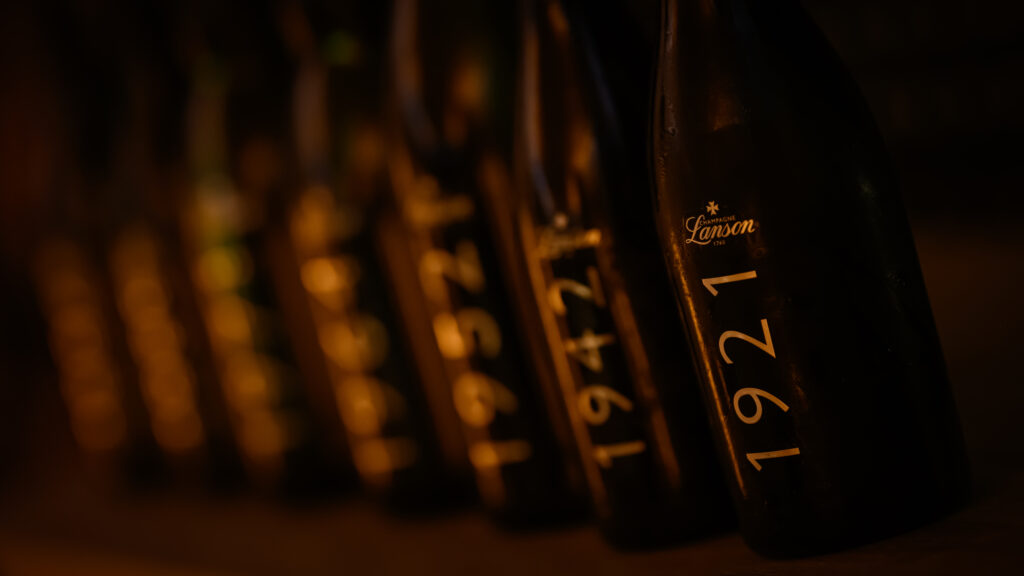
LANSON
★★★★
Lanson was founded in 1760 by François Delamotte it was one of the first Champagne houses. François’s son Nicolas-Louis, who was a knight in the Maltese Order, took over in 1798 and decided to use the Maltese Cross as the company’s symbol. The name Lanson didn’t appear until 1837, and it wasn’t until twenty years later that the firm moved to the present address in Reims. After a brief period in the Louis Vuitton group, Lanson ended up as part of Marne & Champagne in 1990. Today owned by BCC and run by the wonderful Philippe Baijot and his son.
The Champagne house, much appreciated by many royal families, doesn’t own its own vineyards, but instead buys its grapes from sixty different villages. They avoid using malolactic fermentation, making the nonvintage wines a little over acidic and green when young. I’ve had in-depth discussions with the heads of Lanson—including the serious former winemaker, Jean-Paul Gandon—and I must admit that I’m impressed by their solid determination to retain the house-style at any cost. It is no secret that I recommend malolactic fermentation for all blended nonvintage Champagnes that are aimed at direct consumption.
We are, on the other hand, in total agreement that the “Parkerization” that has affected all the red-wine producers of the world should be avoided in Champagne. It would be most unfortunate if the Champagne houses took into consideration my own or Tom Stevenson’s opinions when they make their wines. The region’s diversity must be preserved, and obviously there is a large following for Lanson Black Label. Even the vintage wine is markedly acidic during its first few years on the market, but actually develops very well with age. Old vintages of Lanson are sure bets and value for money. If you have the patience, put the latest vintage down in the cellar for ten years or so—then open and enjoy the bready, yet still-fresh Champagne. Wines from the 1950s, 60s and 70s are, to say the least, brilliant.
‘Noble Cuvée and the new Clos Lanson are fantastic prestige cuvées made by the genious winemaker Hervé d´Antan.’Richard Juhlin