A Stipulation on Scale, Quality, and the Aesthetics of Excess—For Champagneclub.com [ read the full champagne story ]
Estimated reading time: 6 minutes

December is the month of scale. We do not offer modest appetizers; we command feasts. We do not light small candles; we illuminate the whole damned house. And we, the discerning drinkers of the world, do not settle for standard bottles.
The 75-centiliter bottle—the fillette of the serious drinker—is a necessary utility, perfectly suited for a quiet weeknight, a picnic, or a solo contemplation of a new vintage. But December is not quiet, and it is certainly not built for modesty. December requires the Magnum, the Jeroboam, and the glorious, uncompromising commitment to volume.
Choosing to serve Champagne in large format is not merely an aesthetic choice; it is a viticultural imperative. It elevates the quality of the wine, amplifies the sense of occasion, and communicates to your guests a fundamental, sophisticated truth: We are celebrating properly.
I. The Magnum Principle: Quality Through Quantity
The greatest advantage of the large format lies not in the spectacle, but in the physics of maturation. The 1.5-liter Magnum is universally regarded by chefs de cave as the single best vessel for ageing Champagne.
The Golden Ratio of Air and Wine
When Champagne is bottled, a small amount of oxygen remains trapped between the liquid and the cork—this is the oxygen barrier.
- Standard Bottle (75cl): The ratio of liquid volume to the surface area under the cork is relatively small. The trapped oxygen has a significant, relatively rapid impact on the wine, leading to quicker maturation and the development of toasty tertiary aromas.
- Magnum (1.5L): The liquid volume is doubled, but the surface area of the cork remains the same. This drastically reduces the wine-to-oxygen ratio.
The result? The wine ages slower, cooler, and more gently. The mousse is often finer, the flavours integrate more seamlessly, and the wine retains its freshness and vitality for years longer than its 75cl sibling. A 10-year-old Magnum will often taste like a 5-year-old standard bottle—it is a taste of time preserved.
To gift a Magnum is to gift a superior product. To serve a Magnum is to demonstrate an understanding of the fundamental alchemy of the cellar.
II. The Hierarchy of Celebration: Beyond the Magnum
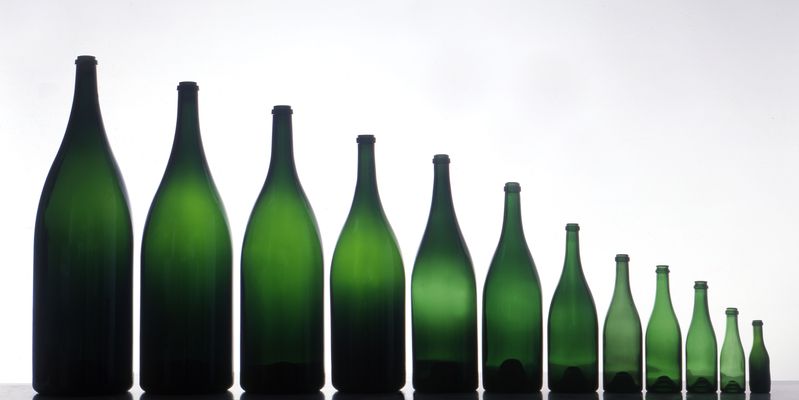
While the Magnum is the workhorse of sophistication, December demands that we acknowledge the full spectrum of celebratory scale.
| Bottle Size | Volume (Liters) | Standard Bottles | The Occasion | The Statement |
| Magnum | $1.5 \text{ L}$ | 2 | The Connoisseur’s Dinner Party (8-10 guests). | “I care about quality and heritage.” |
| Jeroboam | $3 \text{ L}$ | 4 | The Grand Family Gathering / New Year’s Party (15-20 guests). | “This celebration requires serious volume.” |
| Rehoboam | $4.5 \text{ L}$ | 6 | The Small Corporate Event / Major Milestone. | “This is an unforgettable event.” |
| Methuselah | $6 \text{ L}$ | 8 | The Ultimate Feast / Ballroom Event. | “The sky is the limit.” |
The Jeroboam Imperative
The 3-liter Jeroboam is the inflection point between quality and pure spectacle. While the quality gains diminish slightly beyond the Magnum (due to filling and disgorgement complications), the aesthetic gain is immense. The Jeroboam is the visual centerpiece of a Christmas table; it is a promise of generosity and a catalyst for conversation. No one forgets the moment the four-bottle giant is poured.
III. The Strategic Deployment of Scale in December
The sophisticated host does not deploy large formats randomly; they are used to maximize impact across the diverse demands of the holiday month.
1. The Early December Gathering (The Magnum):
For the more intimate, but still important, préludes to Christmas—the close friends, the company gathering—the Magnum is ideal. It provides the superior taste and celebratory size without the logistical stress of a Jeroboam.
- Recommendation: A grower Champagne (RM) Magnum to showcase terroir and quality without breaking the bank.
2. The Christmas Eve/Day Feast (The Jeroboam):
The primary family gathering requires the maximum visual and volumetric impact. The Jeroboam is mandatory for the main event. It ensures that the first pouring is spectacular and that multiple rounds are secured without requiring the host to frantically uncork several standard bottles.
- Recommendation: A Pinot Noir-dominant, reserve-heavy Jeroboam (e.g., Bollinger or a powerful Vintage) to stand up to the richness of the main course.
3. The New Year’s Eve Grand Finale (The Methuselah):
When crowds gather and the clock nears midnight, spectacle trumps all. The 6-liter Methuselah is the ultimate punctuation mark. While the wine quality might not technically surpass the Magnum, the sheer joy, the sense of occasion, and the theatrical necessity of the moment demand the largest reasonable vessel.
- Recommendation: A Blanc de Blancs Methuselah to deliver the necessary elegance and freshness for the midnight toast.
IV. The Practical Art of the Oversized Bottle
Large formats present practical challenges that must be mastered by the host:
- Cooling: Magnums and Jeroboams require significantly longer cooling times. Plan for at least 8 hours in the fridge or use large, deep ice buckets filled with water and ice for rapid cooling (4-5 hours).
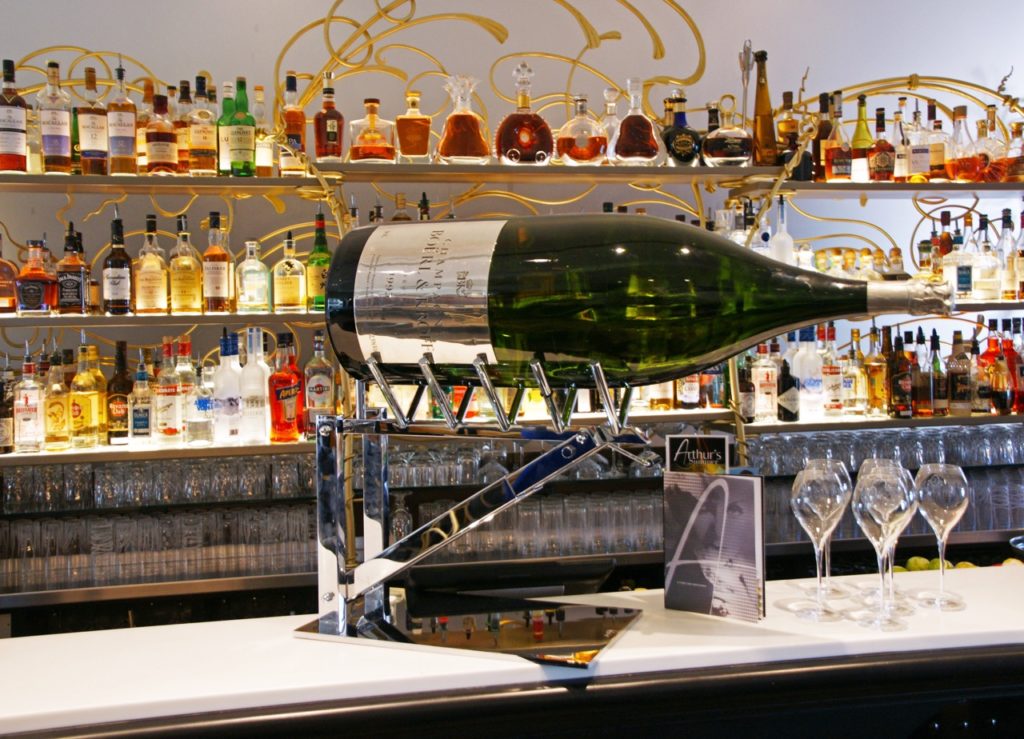
- Pouring: Do not attempt to pour a Jeroboam directly without assistance. Have a dedicated pouring cradle or assign two strong servers to the task. A careful, steady pour minimizes spillage and preserves dignity.
- Decanting: While counter-intuitive for Champagne, very old vintages in Jeroboam or larger bottles may benefit from being briefly transferred to a large decanter (before the cork is popped) to manage the effervescence and ensure clarity, but this is a technique for the extremely advanced.
The large format bottle is the final, essential element of a civilized celebration. It is a commitment to quality, a gesture of generosity, and a perfect acknowledgment that some moments are simply too grand for a single bottle. Throughout December, embrace the necessary liters. Your palate—and your guests—will thank you for it.