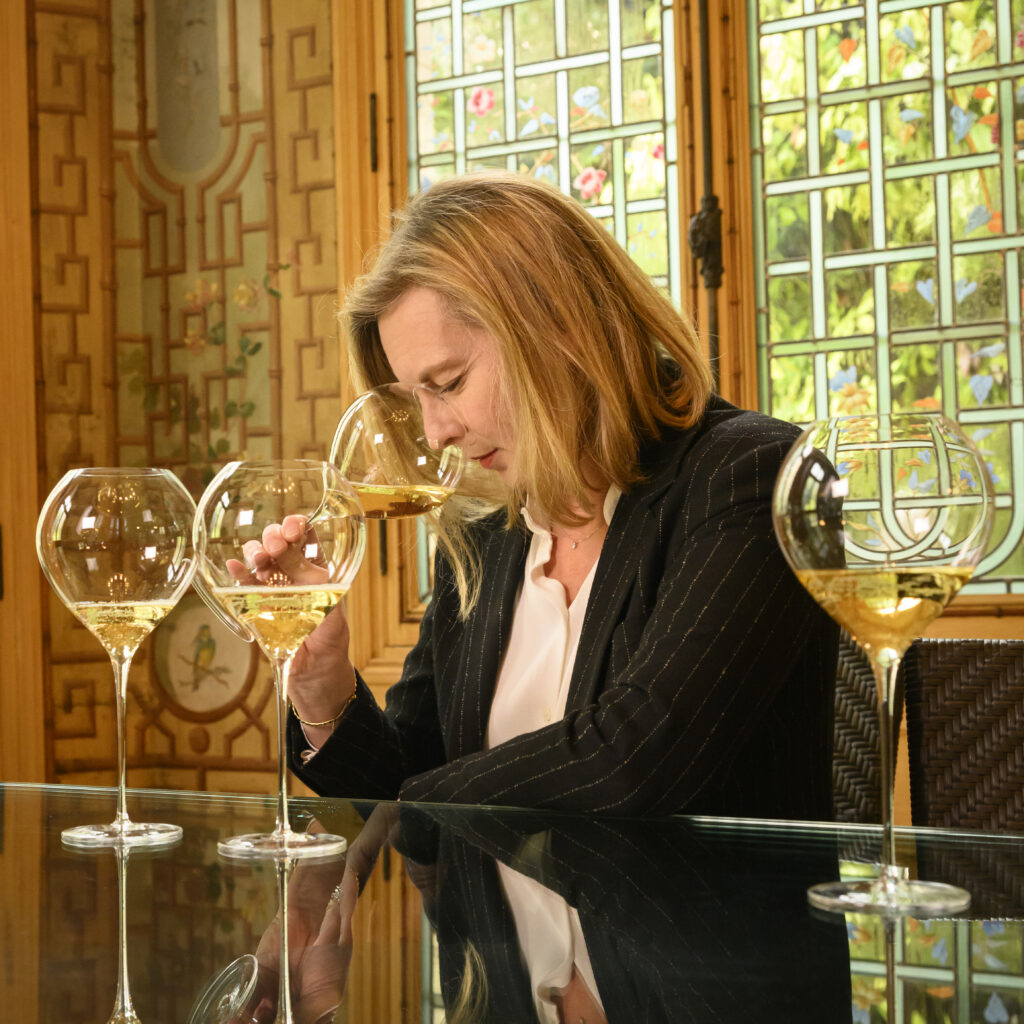
Uncover the allure of 2015 Amour de Deutz: A Liquid Valentine for the Cynical Soul that transcends its charming name. [ read the full champagne story ]
Estimated reading time: 4 minutes
There is a particular kind of person who finds the name Amour de Deutz a bit much. It sounds like something a breathless debutante would sigh into her silk fan, or the title of a particularly saccharine French pop song from 1964. But to dismiss this wine based on its nomenclature is to commit a culinary crime of the highest order. It is like refusing to read A Modest Proposal because you find the title a bit too “polite.”
As TheChampagneSommelier, I have spent a lifetime navigating the chalky, damp corridors of Epernay & Reims—a place that is essentially a giant limestone sponge soaked in history and ego. And let me tell you, Deutz is the quiet aristocrat of Aÿ. It doesn’t scream for your attention like those houses that spend their entire marketing budget on neon signs and celebrity endorsements. It simply exists, perfectly, with a posture that would make a Victorian governess weep with envy.
The Architecture of Desire: 100% Chardonnay
Amour de Deutz is a Blanc de Blancs of such staggering purity that it makes most other Chardonnays look like they’ve been dragged through a hedge backwards. It is sourced from the “founding” Grand Cru terroirs that define the house’s identity: Avize, Le Mesnil-sur-Oger, and Villers-Marmery.
This is not a wine made in the “solar” and “generous” style of a hot year like 2015. No, Amour de Deutz is about tension and energy. It is a wine built on a nervous system of acidity. If it were a person, it would be a highly strung cellist with a sharp wit and impeccable tailoring.
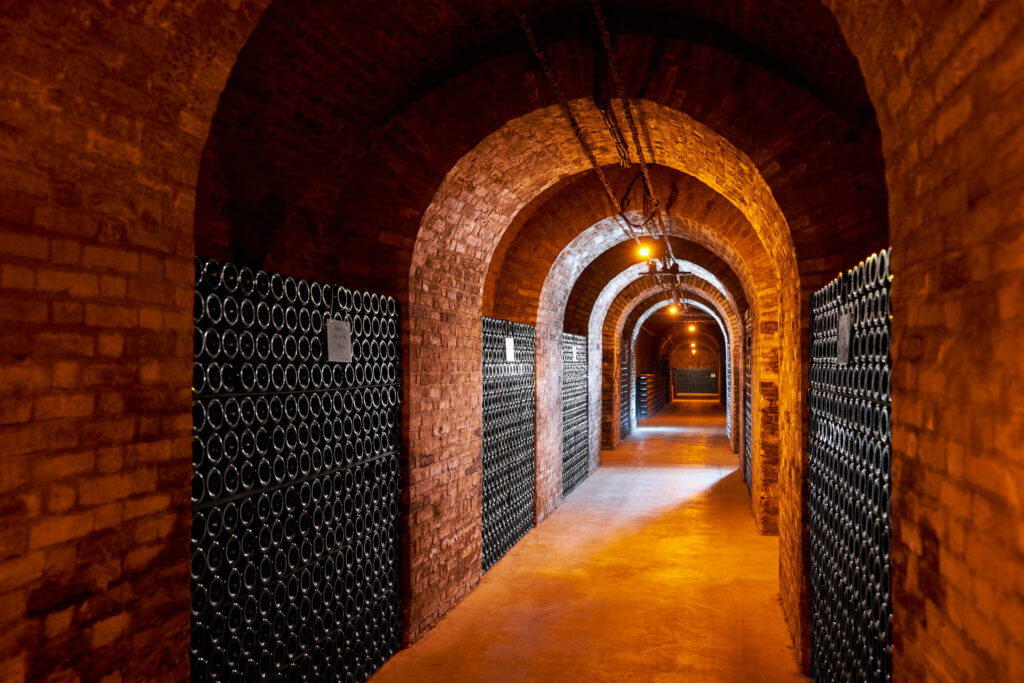
The Ambience: A Cellar in the Shadows
The making of this cuvée is a tribute to the “human hand”—much like the Enchanteleurs of Maison Henriot. It is a wine of “patience and respect,” spending a decade or more in the “quiet darkness” of the Deutz cellars.
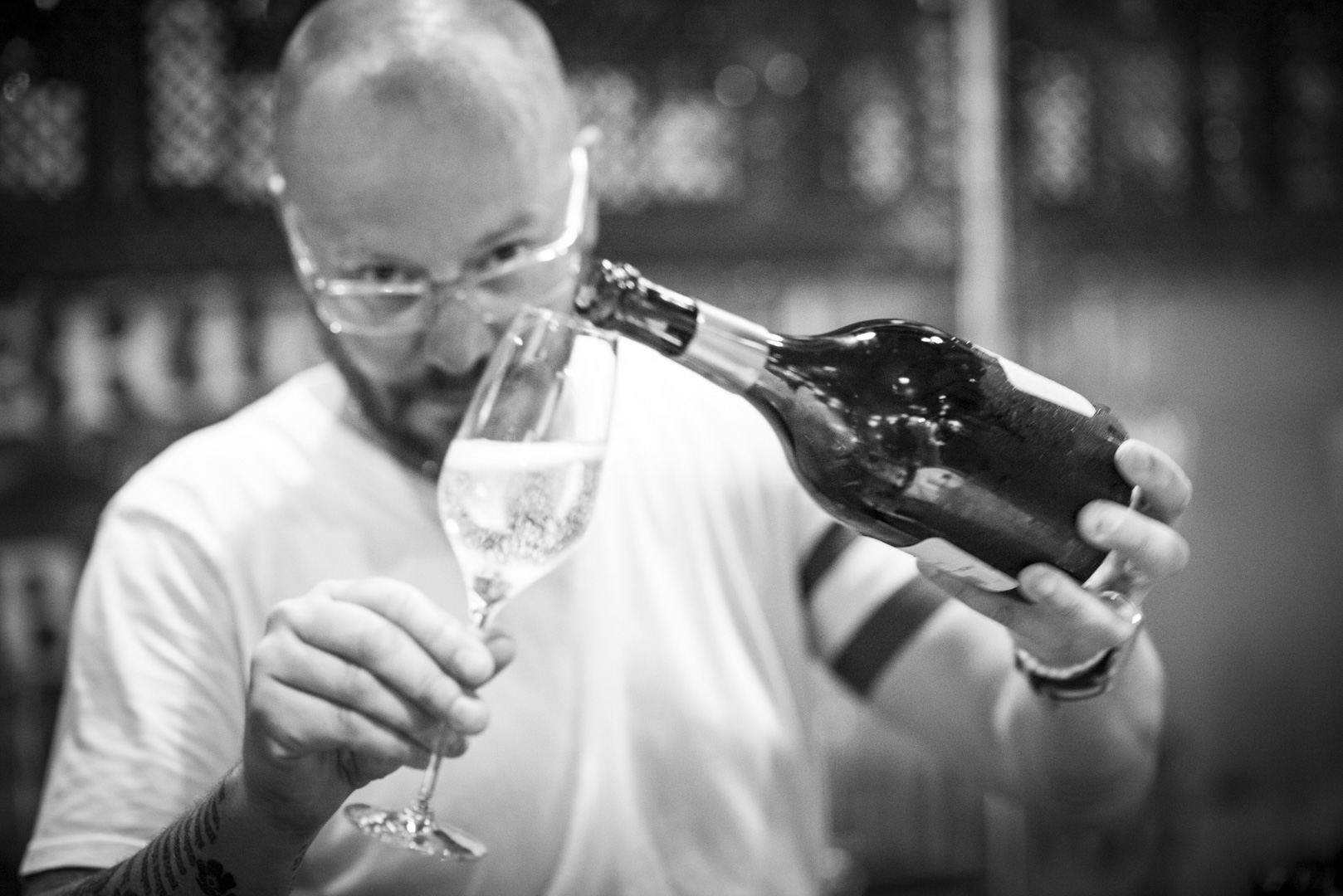
When you pop the cork, you aren’t just opening a bottle; you are releasing a decade’s worth of pent-up elegance. The aromatics are crystalline: white flowers, nectarine, and a touch of hazelnut that suggests a maturity far beyond its years. It has that “persistent mineral finish” that sommelieres dream about when they aren’t dreaming about a day off.
The Food: Gastronomy or Bust
To drink Amour de Deutz with a bag of crisps is a tragedy. It demands a table. It demands a kitchen that understands the “övertänkt smak”—the thoughtful taste.
Pair it with scallops—not the rubbery pucks found in motorway service stations, but the sweet, saline treasures of the Atlantic. The wine’s “freshness and salinity” act as a perfect foil to the creaminess of the shellfish. It is a dialogue between place, grape, and time, where each element finds its rightful place without “excess or artifice”.
Service: Don’t Kill the Sparkle
For the love of all that is holy, do not serve this at the temperature of a polar ice cap. You want it between 9-12°C. Too cold, and you mute the “emotion and light” of the fruit. Too warm, and it becomes flabby—and nobody likes flabby, unless it’s a particularly well-marbled piece of Wagyu.
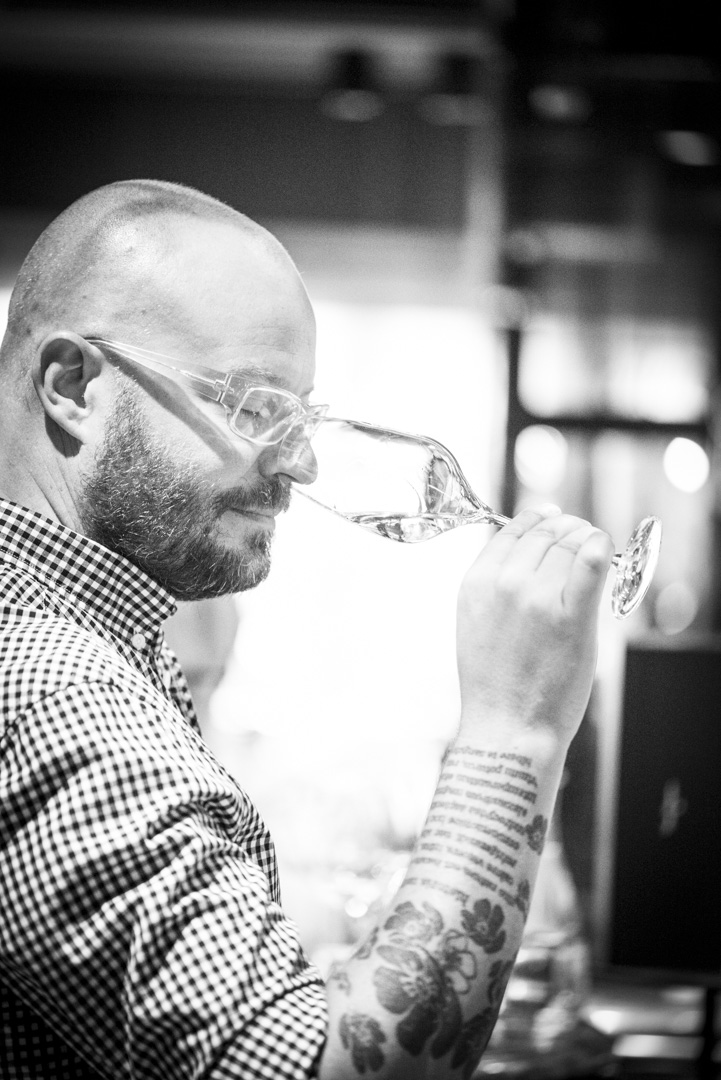
Use a glass with a bit of “precision”—a tulip-shaped glass or a standard white wine glass. You need space for the wine to breathe, to stretch its legs, to tell you its secrets.
The Verdict: A Love Worth Having
Amour de Deutz is a Champagne of “emotion and light,” shaped for time and for memory. It is a reaffirmation of what happens when a house chooses to remain “faithful to its history and its identity” rather than chasing the fleeting whims of the “vinous tourist”.
It is, quite simply, the most remarkable thing you will ever drink while pretending to be a better person than you actually are.
2015 Amour de Deutz according to TheChampagneSommelier
–
Amour de Deutz – The Dressing Room
It begins with the white flowers.
An army of scents marshalled according to a strict protocol.
Amour de Deutz, vintage twenty-fifteen,
rests in the glass like an isolated star in a dressing room
where nothing has been left to chance.
–
Here is the same implacable demand found in Madonnas rider:
the light must be dimmed, the temperature exactly seventy-two,
and the world must halt outside the heavy velvet curtain.
The wine is a Chardonnay-monologue,
stripped of all static, a voice reaching the back rows
without ever being raised.
–
The bubbles move with a choreographed precision,
like dancers who know every unevenness of the floor.
A taste of white peach and crushed chalk,
as cool and distanced as a backstage encounter,
where perfection is the only language spoken.
–
It is a luxury bordering on asceticism.
Behind the golden capsule hides a discipline,
a craft that refuses to accept a single misstep.
We drink a performance that has cost years of waiting,
a shimmering facade concealing the hard labor in the soil.
–
When the last drop has left the glass, an afterimage lingers.
Like the scent of vanilla candles in an empty locker room,
or the echo of an audience that has just ceased its applause.
A feeling of having touched the inaccessible,
that which demands everything,
but grants us a moment of complete, blinding order.